# Real Human Connection Beats AI Feedback in the Classroom
A teacher's recent reflection on student conferences raises a hard question about automation in education. While schools increasingly deploy artificial intelligence to grade assignments and provide feedback, educators warn that algorithmic responses cannot replicate the human connection students need to grow.
The issue centers on what happens when AI handles student feedback. Algorithms excel at speed and consistency. They flag grammatical errors, suggest structural improvements, and deliver identical responses to identical problems. But they miss something teachers recognize instantly. Students need to feel seen by the adults who teach them.
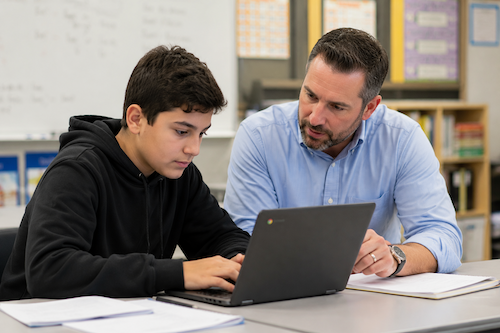
During a student conference, a teacher noticed something an algorithm would never catch. The quality of conversation matters more than the efficiency of grading. When a student like Steven sits across from a teacher, that teacher can read hesitation, confusion, ambition, and doubt. The teacher can adjust tone, probe deeper, and offer encouragement tailored to that specific moment.
AI feedback operates in one direction. A student submits work, receives comments, and either interprets them or ignores them. Human feedback thrives in dialogue. A teacher asks why a student chose a certain approach. The student explains. The teacher listens and responds not just to the work but to the thinking behind it. That exchange builds confidence and understanding in ways a chatbot cannot match.
Schools face pressure to adopt AI to manage workload. Teachers juggle hundreds of students, stacks of essays, and tight grading timelines. AI promises to lighten that load. The trade-off, however, shows itself in student engagement and outcomes. Students report feeling disconnected when feedback arrives from a machine, not a person who knows them.
The argument is not that AI has no place in education. Technology can handle routine tasks and free teachers for deeper work. But schools must protect time and space for genuine human feedback. When a student needs to feel challenged and understood, no algorithm makes the