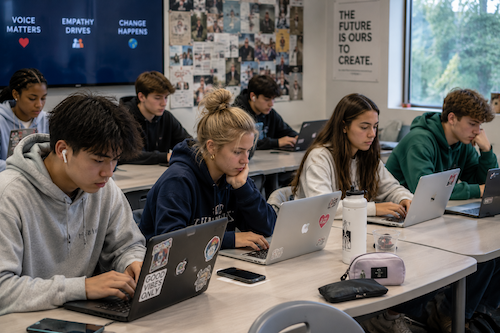
Gen Z students hold surprisingly positive views about artificial intelligence despite widespread public concerns about job displacement and technology's societal impact, according to a new survey tracking the generation's career aspirations and values.
The report examined Gen Z's top 100 dream colleges and preferred employers while assessing how artificial intelligence shapes their career decisions. Rather than viewing AI as purely threatening, many young people see it as a tool that will reshape rather than eliminate opportunities in the workforce.
This optimism stands in contrast to broader anxiety about AI's effects on employment. Educators and parents have raised questions about how rapidly changing technology will affect job markets that Gen Z will enter. Yet the survey data suggests this generation views AI integration as inevitable and, in many cases, positive for their professional futures.
The findings reflect a generation that has grown up alongside digital innovation. Unlike older cohorts who experienced technological disruption as external shocks, Gen Z has never known a world without rapid digital change. That familiarity appears to translate into greater acceptance of AI as a career tool rather than a threat.
However, the survey also captured underlying concerns. Gen Z students worry about skills gaps, ethical implications of AI development, and whether educational systems are adequately preparing them for AI-integrated workplaces. Many recognize that technical literacy and adaptability will be essential for career success.
The data points to a disconnect between Gen Z's personal optimism and broader societal concerns. While young people express confidence in their ability to navigate AI-driven change, schools and employers face pressure to demonstrate concrete preparation strategies. Career guidance counselors report increasing student questions about which skills remain irreplaceable in an AI-augmented workplace.
These findings suggest colleges and universities must align curriculum development with student expectations. Institutions that explicitly address AI literacy, ethical reasoning about technology, and hybrid human-AI work models may attract and better prepare Gen Z students. The generation's optimism creates opportunity for educational leaders to channel that confidence