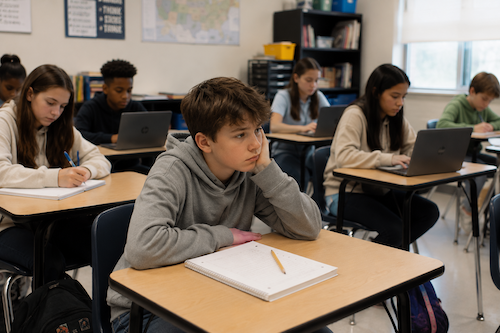
Student disengagement has reached crisis levels in classrooms across the country. Educators report that students tune out at higher rates than in previous years, and the problem extends beyond simple behavioral issues. The underlying cause points directly to how learning experiences are structured in schools today.
Disengagement stems not from student deficiency but from classroom design. When instruction relies heavily on passive listening, worksheets, and disconnected content, students check out mentally regardless of their ability. This reality forces educators to confront uncomfortable truths about traditional teaching methods.
Schools that have reversed disengagement patterns share common practices. They build relevance by connecting lessons to student interests and real-world applications. They embed choice into assignments, letting students pursue questions that matter to them. They create space for collaboration rather than isolated seatwork. They provide immediate, specific feedback rather than grades alone.
The post-pandemic learning environment has amplified this challenge. Students spent months in remote learning, which many experienced as isolating and content-heavy. Returning to classroom settings that replicate that same isolation proves ineffective. Students now demand more from their educational experience.
Teachers themselves often lack training in engagement strategies. Most teacher preparation programs emphasize content knowledge and classroom management but devote limited time to designing learning experiences that capture attention. Professional development focused on active learning, project-based instruction, and culturally responsive teaching offers concrete pathways forward.
Districts making progress prioritize professional development that shifts classroom culture from teacher-centered to student-centered. They allocate time for teachers to collaborate on curriculum redesign. They establish classroom structures that reduce passive learning time and increase student agency.
The shift requires systemic change, not quick fixes. Schools cannot simply add engagement activities to existing lesson plans and expect results. The entire classroom experience must be reconsidered, from how time is structured to how students are assessed to what counts as legitimate knowledge.
Students signal daily what they need: learning that