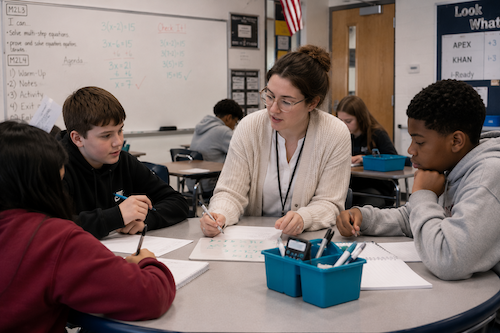
A mathematics teacher's encounter with a high-performing student reveals a widespread instructional gap. The student solved complex equations correctly but could not explain the reasoning behind the method. This disconnect between procedural skill and conceptual understanding shapes the debate over how American classrooms should teach math.
Research from international assessments shows countries like Singapore, South Korea, and Finland emphasize deep conceptual understanding alongside procedural fluency. These nations teach students not just how to solve problems but why specific methods work. Their students develop stronger foundational knowledge that transfers to new problem types.
The U.S. math curriculum has historically prioritized speed and accuracy. Students memorize algorithms and practice computation drills. While procedural skills matter, this approach often leaves gaps in understanding. Students can execute steps without grasping underlying principles, limiting their ability to troubleshoot mistakes or adapt methods to unfamiliar problems.
Comparative classroom observations reveal concrete differences. In high-performing international systems, teachers spend more class time on fewer topics, allowing deeper exploration. Lessons move slowly through connected ideas. Students explain their thinking repeatedly. Teachers ask probing questions that push students to justify their work.
American classrooms often rush through content standards. Teachers cover more topics with less time per concept. Practice worksheets emphasize repetition over reasoning. Homework loads grow heavier while classroom discussion shrinks.
Integrating international approaches requires structural changes. Teachers need time to redesign lessons around conceptual understanding. Textbooks and assessments must shift away from speed-based metrics. Professional development must equip educators to ask higher-order questions and facilitate student-led explanations.
Some U.S. schools have adopted elements from high-performing systems. They have reduced topic volume, increased wait time for student responses, and redesigned assessments to measure reasoning. These shifts show promise in raising both understanding and long-term retention.
The lesson from international classrooms is clear.