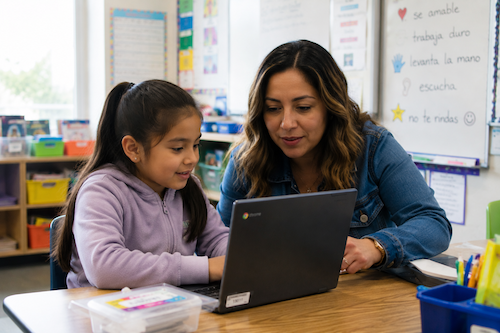
Oracy, the skill of speaking and listening effectively, addresses a critical gap in how schools support multilingual learners. Language instruction has traditionally focused on reading and writing, leaving speaking and listening development underserved for students learning English or other languages alongside their native tongues.
When oracy receives structured attention, multilingual students experience measurable shifts in classroom engagement. They move from simple answer-giving to reasoned explanation, from passive participation to active contribution, and from silence to voice. This progression matters because multilingual learners often face compounded challenges. Language is not simply their subject of study. It functions as their primary tool for accessing all other content. Without strong speaking and listening skills, these students struggle to participate in discussions, ask clarifying questions, and build relationships with peers.
Research on oracy implementation shows that explicit instruction in speaking skills, combined with deliberate listening practices, improves academic outcomes across subjects. When teachers model discourse moves like questioning, building on others' ideas, and organizing thoughts aloud, multilingual students gain frameworks they can replicate. Peer discussion structures, debate formats, and collaborative talk activities create low-stakes opportunities to practice language while developing subject knowledge simultaneously.
The approach differs from traditional English as a Second Language instruction. Rather than isolating language work in pull-out classes, oracy embeds speaking and listening into regular classroom instruction. Teachers across all subjects learn to facilitate productive talk, not just deliver information. They ask open-ended questions, wait longer for responses, and create space for students to think aloud.
Schools implementing oracy programs report gains in student confidence, vocabulary acquisition, and content comprehension. Multilingual learners who develop oracy skills also show improved reading and writing performance, suggesting that speaking and listening form a foundation for literacy development.
Districts seeking to support their multilingual populations increasingly recognize that addressing the speaking gap yields returns beyond language class. It opens academic pathways for students who might