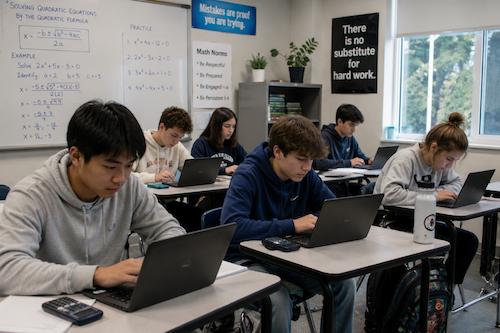
A new survey finds that 68 percent of surveyed students use AI tools to help with math assignments and exams when they need extra support. The finding comes as educators grapple with how to integrate artificial intelligence into classrooms while managing academic integrity concerns.
The survey data reveals that AI has become a routine part of math study habits for a substantial portion of students. Top-performing math students in particular report turning to AI tools as a learning resource, suggesting the technology functions as a tutoring supplement rather than purely a shortcut.
This adoption pattern reflects broader trends in how students approach homework and test preparation. AI platforms like ChatGPT and specialized math tools can walk students through problem-solving steps, explain concepts, and generate practice problems. For students without access to private tutors or consistent teacher availability, these tools fill a real gap.
The finding presents schools with a practical challenge. Many districts have restricted or banned AI use outright, citing cheating risks. Others have begun developing policies that permit AI as a learning aid under specific conditions. The survey suggests that blanket prohibitions may not align with how students actually work, and that policies focused on appropriate use might be more realistic than attempting total bans.
Teachers report mixed experiences. Some find that students who use AI thoughtfully improve their math comprehension. Others observe that students sometimes rely on AI to avoid learning fundamentals. The distinction often comes down to how students engage with the tool. Using AI to check work and understand mistakes differs from using it to generate answers without comprehension.
Districts implementing effective AI policies tend to focus on transparency and learning outcomes rather than policing tool use. Some require students to show their work alongside AI-generated solutions. Others teach explicit skills for prompting AI effectively and evaluating its responses critically.
The survey underscores that AI adoption in schools is already happening whether or not institutions formally permit it. Students are voting with their keyboards. Schools that acknowledge this reality