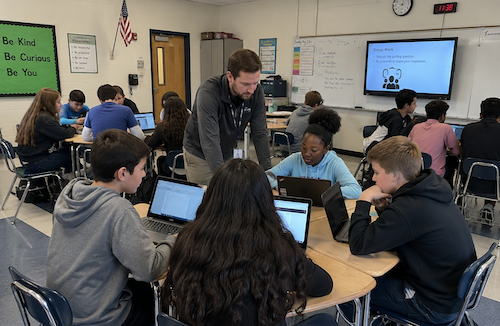
# How AI Helps Teachers Spend Less Time on Assessments and More Time on Instruction
Teachers spend roughly one-third of their time on assessment tasks, from grading papers to analyzing test scores. AI tools now automate much of this work, freeing educators to focus on actual teaching and student relationships.
The shift addresses a real pain point. Grading stacks of essays, tracking student progress across multiple assessments, and identifying learning gaps consume hours each week. AI systems can score standardized responses, flag students who need intervention, and generate data summaries that would normally require manual review. Teachers then use these insights for targeted instruction rather than starting from scratch.
The guardrail matters here. Education leaders emphasize that AI augments rather than replaces teacher judgment. Automated grading works best on factual responses and structured formats. Essays, creative work, and nuanced thinking still require human evaluation. The technology shines when it handles the routine work so teachers reclaim time for deeper conversations with students, collaborative lesson planning, and personalized instruction.
Schools implementing AI assessment tools report concrete benefits. Teachers spot struggling students faster through automated progress dashboards. They spend less time on clerical tasks and more on instructional design. Students sometimes get faster feedback on practice work, allowing them to adjust understanding mid-unit rather than waiting weeks for grades.
The risks remain real. Over-reliance on automated scoring can reduce writing quality if students perceive grades as purely algorithmic. Data privacy concerns emerge when assessment platforms collect student performance across districts. And educators need training to interpret AI-generated insights accurately, not simply accept them as truth.
Effective deployment requires clear boundaries. Schools using AI for assessment establish protocols where teachers verify results, especially for high-stakes decisions like special education referrals or class placement. They treat AI output as a starting point for analysis, not the final word.
The most successful implementations pair automation with human