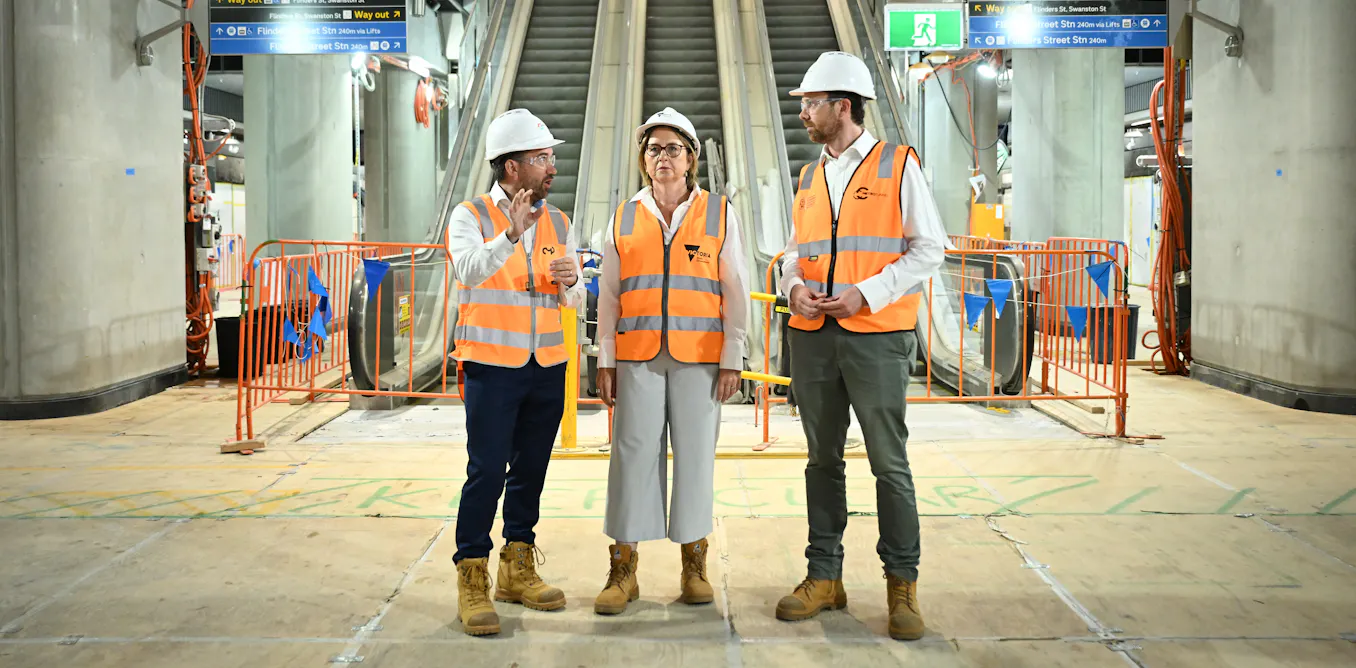
Victoria's $100 billion infrastructure program, known as Big Build, faces serious allegations of organized crime infiltration, yet the state government has resisted calls for a Royal Commission to investigate the full scope of corruption.
The scale of potential wrongdoing remains unknown because no comprehensive public inquiry has examined the projects systematically. Without an official investigation with statutory powers, authorities cannot compel witnesses, access documents, or subpoena evidence held by contractors, unions, and government agencies. This opacity prevents accountability and leaves taxpayers unaware of how public money has been spent.
Big Build encompasses major projects like the Metro Tunnel, level crossings removal, hospital upgrades, and road improvements across Melbourne and regional Victoria. These large-scale construction initiatives create opportunities for organized crime through bid rigging, labor racketeering, supply chain manipulation, and bribery of officials. The construction industry in Victoria has long been vulnerable to such infiltration.
Previous investigations have revealed concerning links. The 2016 royal commission into union corruption exposed misconduct in the building and construction sector. More recent reports suggest criminal networks continue targeting major infrastructure contracts. Yet specific details about corruption within Big Build remain fragmented across multiple agencies rather than consolidated in a unified public inquiry.
A Royal Commission would establish an independent body with authority to examine all Big Build contracts, identify patterns of criminality, and recommend systemic reforms. It would create a public record that educates stakeholders about vulnerabilities in procurement processes and project management. The findings would inform stronger vetting procedures, contract monitoring, and governance frameworks for future infrastructure spending.
Without such scrutiny, Victoria risks normalizing corruption within its largest public investment. The government's resistance to a Royal Commission suggests either confidence in current oversight mechanisms or reluctance to expose the full extent of wrongdoing. Either position fails the public interest. Taxpayers funding these projects deserve to know whether their money has been diverted through criminal schemes and what prevent