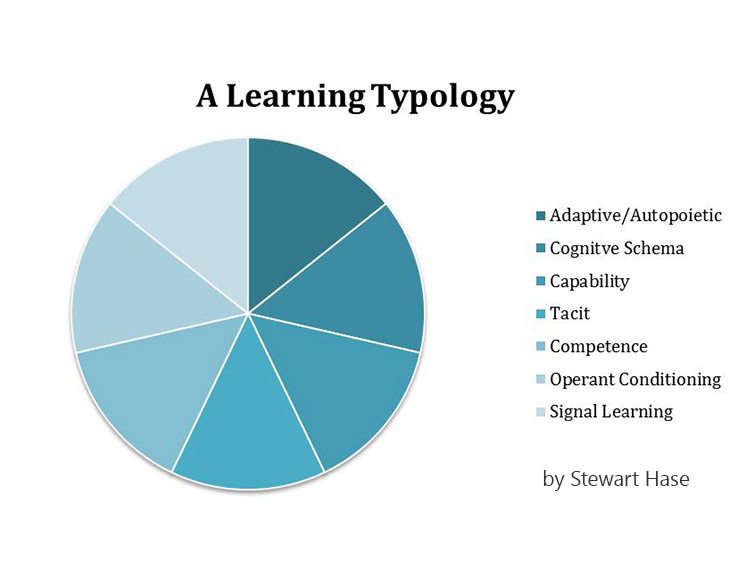
# A Learning Typology: 7 Ways We Come To Understand
TeachThought has introduced a learning typology that identifies seven distinct pathways through which people develop understanding. Unlike a taxonomy, which ranks or categorizes items hierarchically, a typology treats these learning approaches as parallel modes with equal validity.
The framework addresses a persistent gap in education: the recognition that students learn differently, yet most classrooms remain structured around a single delivery method. By mapping multiple pathways to understanding, educators gain tools to design instruction that reaches diverse learners.
The seven modes encompass varied cognitive and experiential routes. Some students understand through abstract reasoning and logical analysis. Others grasp concepts through sensory experience, physical manipulation, or social interaction. Still others learn by observing patterns, constructing meaning from direct experience, or reflecting on their own thinking processes.
This distinction matters in practice. A typology suggests that no single mode holds primacy. A student who struggles with lecture-based instruction may excel when learning unfolds through hands-on experimentation or peer discussion. Traditional educational models often privilege linguistic and logical reasoning, inadvertently marginalizing students whose strengths lie in kinesthetic, interpersonal, or naturalistic dimensions.
The framework aligns with existing research on learning differences while avoiding the baggage of learning styles mythology, which decades of research have debunked. TeachThought's approach focuses on observable pathways people actually use to construct understanding, rather than fixed preferences or innate traits.
For classroom application, the typology encourages teachers to intentionally vary instructional strategies. A single lesson might incorporate logical problem-solving, collaborative exploration, sensory engagement, and reflective questioning. This approach acknowledges that understanding emerges through multiple routes and that students benefit from exposure to varied learning pathways.
The framework offers teachers a practical lens without demanding individual student classification or expensive interventions. Instead, it positions varied instruct