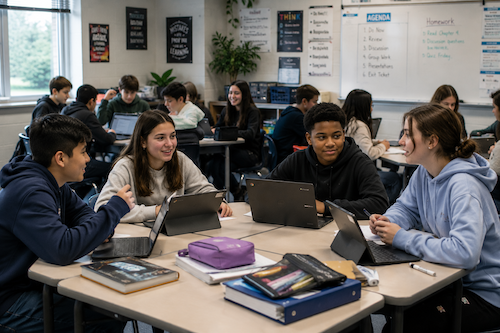
Schools fail to treat students as active participants in their own learning. Current education systems rely heavily on letter grades and standardized test scores while ignoring student input on what matters most to them.
Student agency, defined as a learner's ability to make meaningful choices about their education, drives engagement and real-world skill development. When students help shape their learning paths, they develop stronger growth mindsets and better transfer classroom knowledge into practical applications. Yet most schools collect limited data about what students actually want or need.
The barriers are structural. Schools typically hoard educational data behind administrative walls, restricting student access to their own performance information. Students rarely see comprehensive pictures of their strengths, learning patterns, or progress toward self-selected goals. This opacity strips away agency and reduces motivation.
Schools must open data access to students and families. Transparent dashboards showing academic progress, skill development, and learning preferences empower students to advocate for themselves. When teenagers understand their own data, they can identify gaps, celebrate growth, and set meaningful targets alongside educators.
Greater student agency also requires institutional changes. Schools need to build feedback loops where student voice genuinely influences classroom practices, course offerings, and school policies. This means scheduled conversations where learners articulate their interests and learning styles, not one-way reporting where adults make all decisions.
The shift benefits everyone. Students develop metacognitive skills and ownership over learning. Teachers gain insights into learner motivation and can differentiate instruction more effectively. Schools collect richer data about what instructional approaches actually work for diverse populations.
Implementing accessible data systems and authentic student agency requires investment in technology platforms and educator training. Schools must commit to treating students as partners rather than passive recipients. This transformation moves beyond grades and test scores to recognize students as individuals with unique potential worthy of respect and inclusion in educational decision-making.