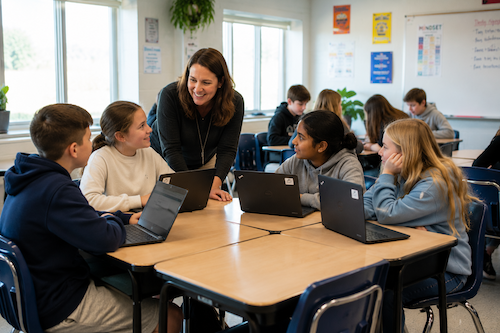
School experience depends heavily on the consistency students receive across classrooms and grade levels. A student may thrive with one teacher who provides clear support and then struggle the next period with an instructor who doesn't communicate expectations or offer similar encouragement.
This inconsistency creates real challenges. Students need predictable structures, clear feedback, and adult relationships that span their school day. When communication breaks down between teachers or departments, students often fall through the cracks. A ninth grader might excel in English but flounder in math because no one connected those classrooms to share strategies or flag early warning signs.
Districts that prioritize consistency see measurable results. Schools implementing collaborative planning time for teachers across grade levels report higher attendance and academic growth. When staff establish shared expectations for classroom management, student behavior improves. When teachers communicate regularly about struggling learners, intervention begins sooner.
Communication matters just as much vertically as horizontally. Third grade teachers who brief fourth grade teachers about a child's learning style or family situation set that student up for success. Elementary schools that send detailed transition records to middle schools reduce the post-transition dip in academic performance that typically occurs in sixth grade.
The reverse also proves true. When teachers operate in isolation, students experience whiplash. One classroom expects homework nightly. Another assigns none. One teacher offers retakes on tests. Another marks the first attempt final. Students waste energy adapting to different systems instead of focusing on learning content.
Building consistency requires deliberate action. Districts need structured time for teachers to plan together across departments. Schools need clear, written policies on grading, classroom management, and communication that all staff follow. Leaders must hold staff accountable for implementation while providing training and support.
Parents and guardians accelerate this work by asking specific questions. What communication will teachers use? How will the school handle transitions between grades? What happens when a student needs help? Families who ask these questions often uncover