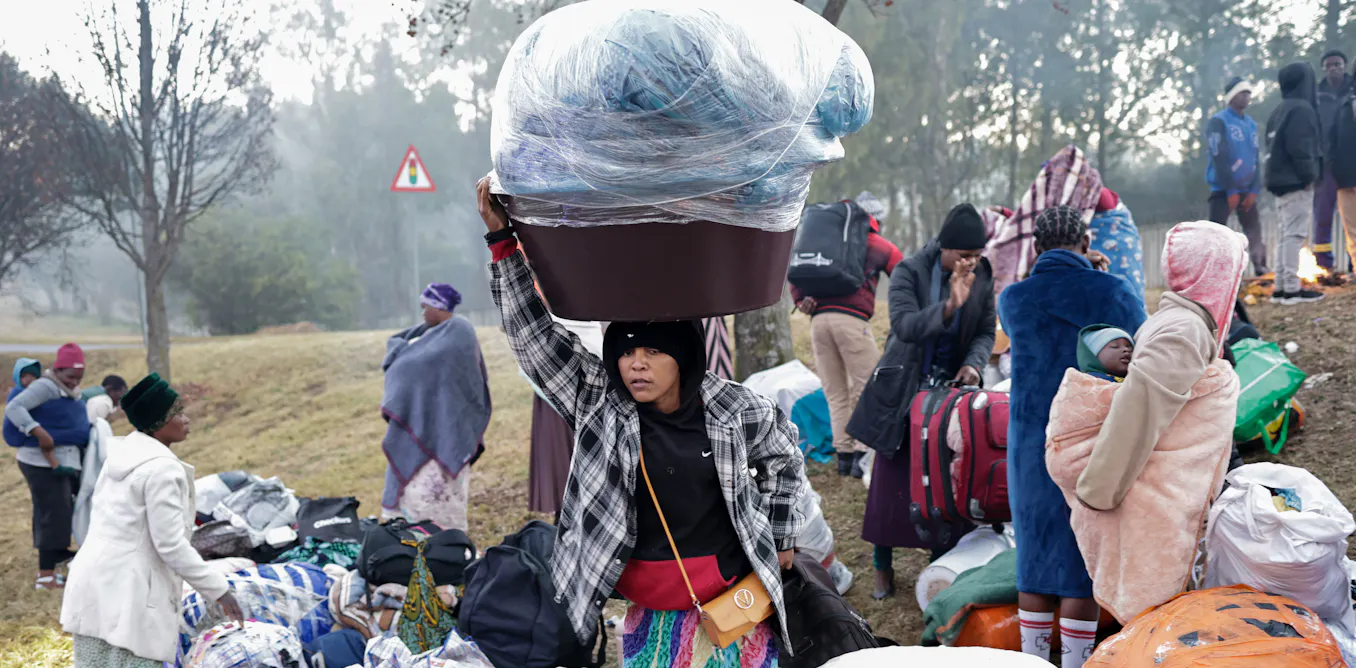
The 1951 Refugee Convention turns 75 this year amid mounting pressure from governments worldwide to restrict asylum protections. The treaty, established after World War II, defines who qualifies as a refugee and obligates signatory nations to provide basic protections regardless of national origin. Today, 195 countries have adopted it.
Yet the convention faces sustained criticism. Policymakers argue it no longer fits the realities of modern displacement driven by climate change, gang violence, and economic collapse. Some nations have adopted what advocates describe as "ruthless" border policies that circumvent the treaty's protections. The UK recently passed legislation enabling it to deny asylum to migrants who cross the English Channel on boats. Australia maintains offshore detention centers that avoid direct treaty obligations. Hungary and Poland have dismantled asylum processes.
Critics contend the treaty lacks enforcement mechanisms and that wealthy nations exploit loopholes to reject applicants. They note the convention predates contemporary forms of displacement and fails to address root causes of migration.
Supporters counter that eliminating or weakening the convention would create far worse outcomes. The treaty establishes clear, binding rules preventing states from returning refugees to persecution, torture, or death. This principle of non-refoulement remains foundational to international law. Without it, vulnerable populations face arbitrary treatment based solely on national whim.
The treaty also provides a shared framework that prevents a race to the bottom, where nations compete to adopt the harshest policies. Its existence creates diplomatic pressure and accountability structures, however imperfect.
Global refugee numbers now exceed 100 million, the highest on record. The convention's critics may be right that it requires updates for modern challenges. But dismantling it entirely during an era of historic displacement and hardening rhetoric would leave displaced people entirely unprotected by international law. The treaty remains the only universal safeguard preventing governments from treating refugees as disposable.