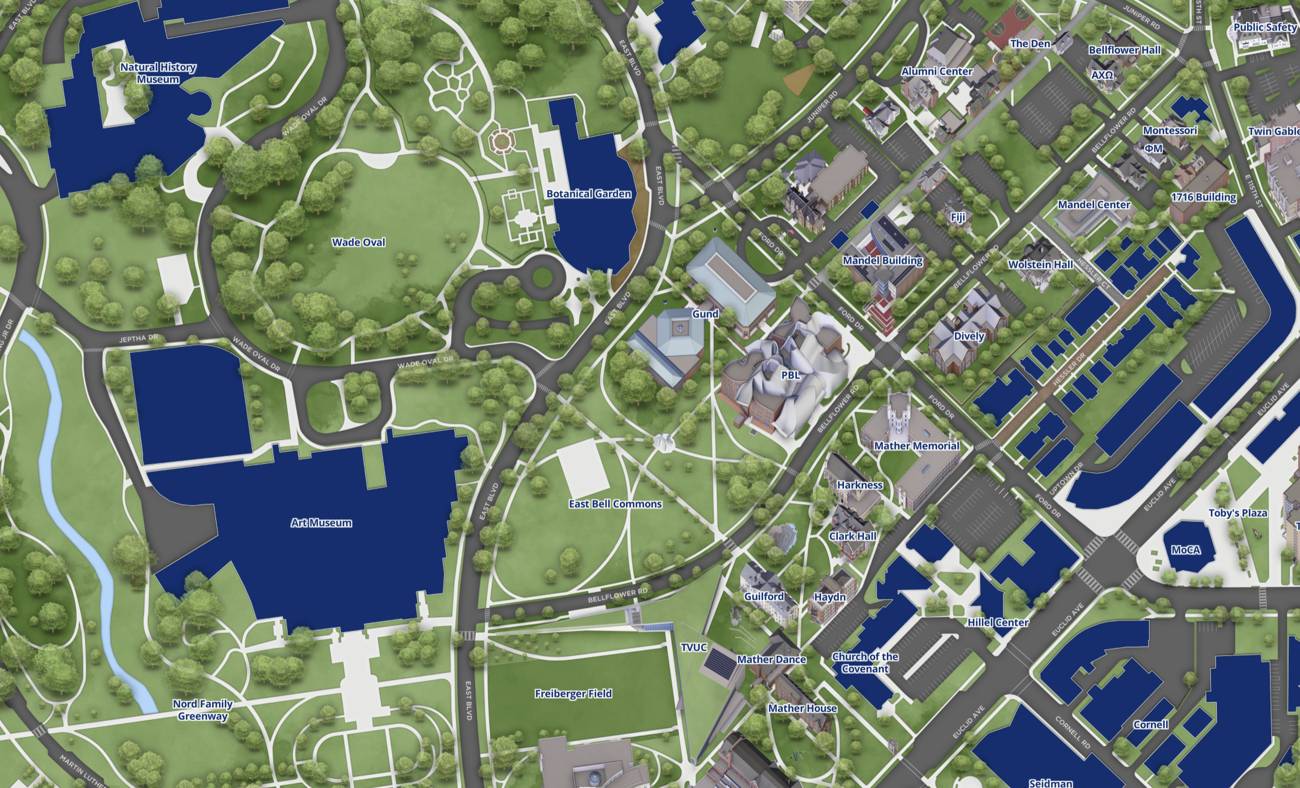
Case Western Reserve University has launched an updated interactive campus map that helps students and visitors navigate its Cleveland campus with turn-by-turn directions between buildings.
The new tool addresses a common student pain point. Large university campuses often confuse newcomers and make it difficult for visitors to locate specific academic buildings, residence halls, and facilities. The map's directional feature streamlines this process, eliminating the need for students to ask for directions or consult multiple resources.
The platform operates as a digital wayfinding system integrated into the university's online infrastructure. Students can search for specific locations, receive walking directions with step-by-step guidance, and identify nearby buildings and amenities. This type of technology has become increasingly common at universities nationwide, as institutions recognize how mapping tools improve the student experience during orientation and throughout their time on campus.
Wayfinding maps serve broader institutional goals beyond convenience. They reduce anxiety for first-year students during orientation week and help prospective visitors navigate campus during recruitment tours. For international and transfer students adjusting to new environments, clear directional tools accelerate their sense of belonging and campus familiarity.
Case Western Reserve joins other universities implementing digital wayfinding solutions. Schools like Indiana University and the University of Florida have deployed similar interactive campus maps to support student success and operational efficiency.
The timing aligns with universities' increased focus on student experience technology and campus accessibility improvements. As enrollment management becomes more competitive, institutions invest in tools that strengthen recruitment efforts and improve retention by making campus life more navigable and welcoming.
The university has not announced plans to expand the map's features, though future updates could include real-time building occupancy information, accessibility routing for students with mobility considerations, or integration with campus shuttle schedules.