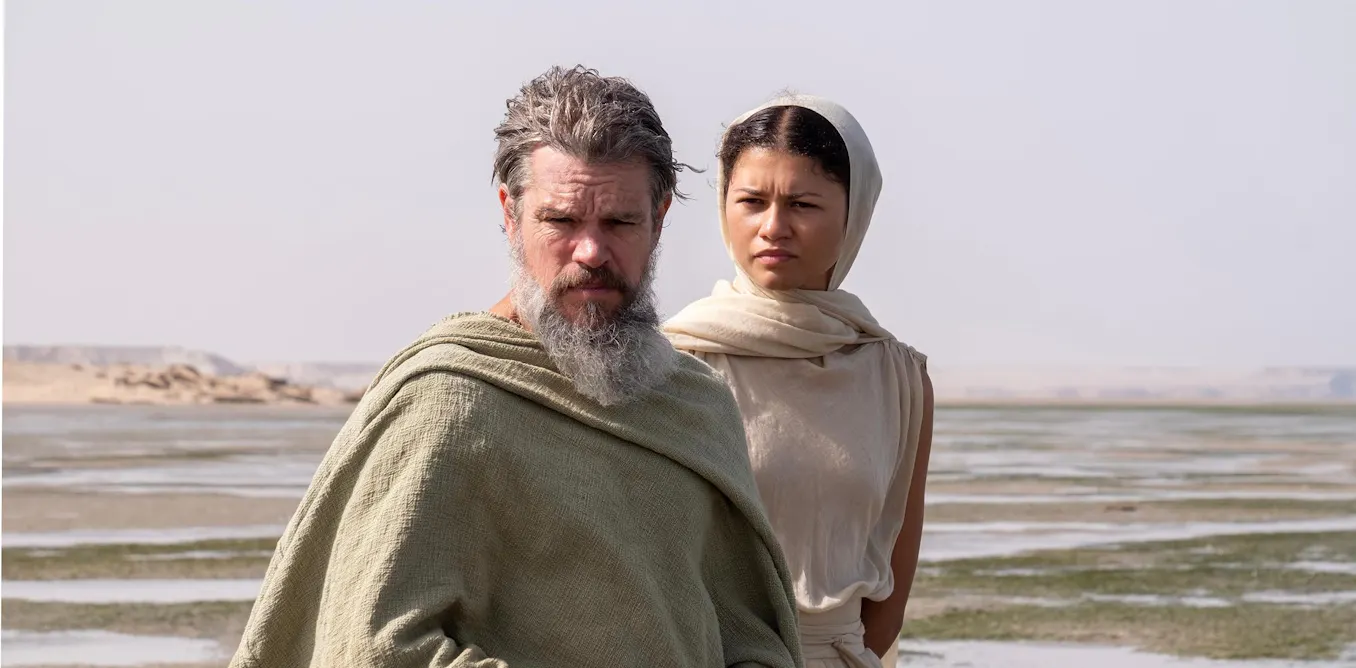
# Nolan's 'The Odyssey' Resists Hollywood's Hero Flattening
Christopher Nolan's upcoming film adaptation of Homer's "The Odyssey" breaks from Hollywood convention by preserving the moral complexity of its central character, according to analysis in The Conversation. Rather than simplifying Odysseus into a straightforward protagonist, the film acknowledges that Homer's original hero operated in shades of gray.
The classical Odysseus was neither purely heroic nor villainous. He displayed cunning and bravery alongside deceit and brutality. He manipulated others, abandoned Penelope for years, and killed the suitors with questionable justification. Yet mainstream cinema typically strips away these contradictions, presenting audiences with heroes who fit neatly into either "good" or "bad" categories.
Nolan's approach reverses this trend. By maintaining Odysseus as a flawed figure whose methods and motivations warrant scrutiny, the film honors the source material's philosophical depth. This matters for educators and students engaging with classical literature adapted for screen.
When films reduce complex characters to caricatures, they distort students' understanding of foundational texts. Young viewers may internalize a sanitized version of the character that bears little resemblance to Homer's original vision. Conversely, adaptations that preserve moral ambiguity encourage viewers to think critically about heroism itself.
The distinction extends beyond entertainment value. Literature classrooms benefit when film adaptations model fidelity to character complexity. Teachers can leverage Nolan's choices to spark conversations about why contemporary audiences gravitate toward simplified heroism and what we lose when we abandon nuance.
Homer's epics endure precisely because their protagonists operate in moral gray zones. Odysseus earns sympathy through his suffering and determination while simultaneously challenging our sympathies through his choices. His contradictions feel human, not