# Where the World's Biggest Diamonds Come From
Geologists have identified how the largest diamonds on Earth form, tracing their origins to the mineral olivine found in kimberlite rock deep beneath the surface.
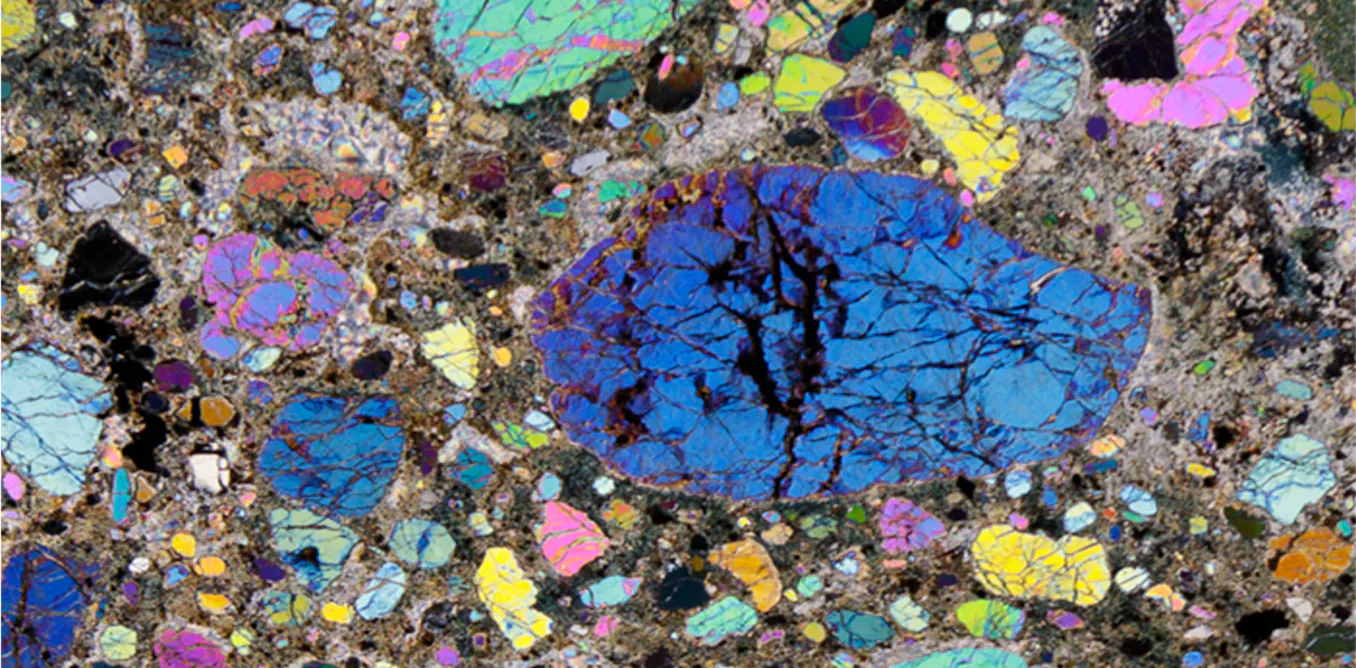
Kimberlite, a volcanic rock that erupts from Earth's mantle, serves as the primary vehicle for transporting diamonds to the surface. Within this rock, olivine crystals preserve a record of diamond formation conditions. By studying olivine composition and structure, researchers can now reconstruct the pressure, temperature, and chemical environment where massive diamonds crystallize.
The research reveals that the biggest diamonds form in specific regions of Earth's mantle, roughly 120 to 200 kilometers below the surface. These extreme depths create the precise conditions necessary for carbon atoms to bond into the dense crystalline structure that produces gem-quality diamonds. Not all kimberlite eruptions contain these large stones. The mineral composition of the host rock determines whether diamonds survive the journey to the surface intact.
This discovery matters for diamond exploration and mining operations. Companies can now target kimberlite pipes with olivine compositions that match known diamond-producing sites. The analysis also provides evidence about mantle chemistry and Earth's internal structure.
The findings emerge from advances in microscopy and chemical analysis that allow geologists to examine olivine at unprecedented detail. Researchers studied samples from major diamond deposits in South Africa, Russia, and other regions, comparing olivine characteristics across productive and barren sites.
Understanding diamond origins extends beyond commercial interest. The research illuminates how the planet's interior functions and how materials cycle between Earth's mantle and crust over geological time scales. Olivine serves as a window into processes occurring thousands of kilometers below our feet.
The study reinforces that diamonds are not random geological accidents but products of specific, reproducible conditions. This knowledge shapes both our understanding of planetary science and practical approaches to locating Earth's