# The Hidden Cost of Fragmented Student Data in K–12 Schools
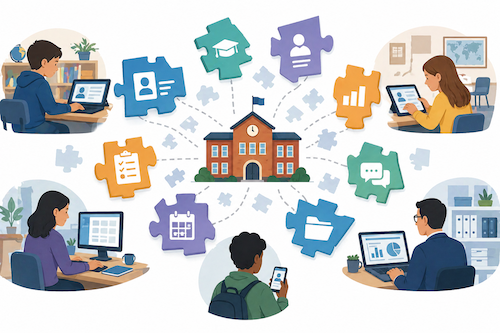
Student information scattered across disconnected systems is hobbling K-12 schools. Teachers access attendance in one platform, grades in another, behavioral records in a third. Counselors hunt through separate databases. Parents receive inconsistent information about their child's progress. The fragmentation wastes staff time, creates data errors, and ultimately harms student outcomes.
Schools accumulate data across multiple vendors without central coordination. A student's academic records live in one system, health information in another, special education files in a third. Discipline data sits isolated. When systems don't communicate, educators miss critical patterns. A teacher unaware of a student's documented anxiety may interpret quiet behavior as disengagement. Counselors cannot see the full picture needed to identify students at risk of dropping out.
The operational burden is real. Teachers spend hours manually entering duplicate information across platforms. Administrators cannot quickly generate accurate enrollment reports. When a student transfers between schools within a district, their complete record often fails to move seamlessly. Privacy and security risks multiply when data lives in poorly integrated systems.
Parent-school communication suffers most. Families receive conflicting messages about academic standing. Some parents check one portal; others use another. Schools cannot reliably reach families with urgent updates when contact information spreads across systems. The disconnect erodes trust and parent engagement.
Districts investing in data integration systems report measurable benefits. Unified platforms allow educators to spot struggling students faster, target interventions more precisely, and track intervention effectiveness. Teachers spend less time on administrative tasks and more time teaching. Families receive consistent, timely information through a single source.
The cost of fragmentation extends beyond staff frustration. Schools that cannot synthesize student data struggle to identify achievement gaps, allocate resources equitably, or demonstrate progress to stakeholders. Modern teaching requires knowing each student's full context. Fragmented