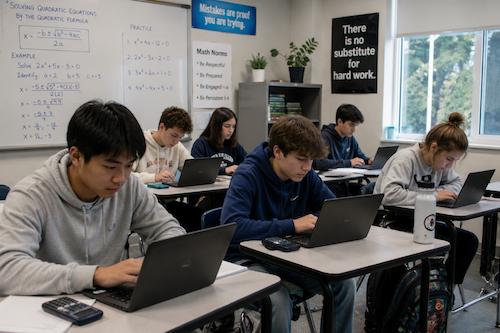
A new survey reveals that 68 percent of high-performing math students use AI tools to support their learning, framing artificial intelligence as an emerging study aid rather than purely an academic integrity threat.
The finding challenges assumptions that AI in education centers solely on cheating. Among top performers in mathematics, the technology functions as a tutoring resource. Students report turning to AI when tackling difficult assignments or preparing for exams. The tools help them work through problems and understand concepts they initially find confusing.
This data matters for schools developing AI policies. Many institutions have moved quickly to restrict or ban AI use without distinguishing between legitimate learning support and academic dishonesty. The survey suggests a more nuanced approach may reflect student reality. High achievers appear to use AI as a supplement to existing instruction, not a replacement for effort.
However, the finding raises implementation questions educators must address. Schools need clearer guidance on how students should integrate AI into their work. What constitutes appropriate use versus plagiarism? Should students disclose AI assistance? How do teachers evaluate work when AI played a role in problem-solving? These questions remain unanswered.
The survey also highlights disparities. Not all students have equal access to quality AI tools. Families with resources can afford premium versions, while others rely on free, sometimes less capable options. This access gap could widen existing achievement gaps unless schools provide equitable tools.
Math instruction offers particular opportunity here. Mathematics often involves procedural steps where AI can show working and explain reasoning. Students can learn from watching the algorithm solve problems, then apply that understanding to homework independently. Unlike essay writing, where AI generates finished products, math tutoring can preserve the learning process.
Schools piloting responsible AI integration in math are testing systems that require students to show their own work alongside AI-assisted steps. Some institutions embed AI use directly into curriculum rather than treating it as contraband.
The survey points toward a coming