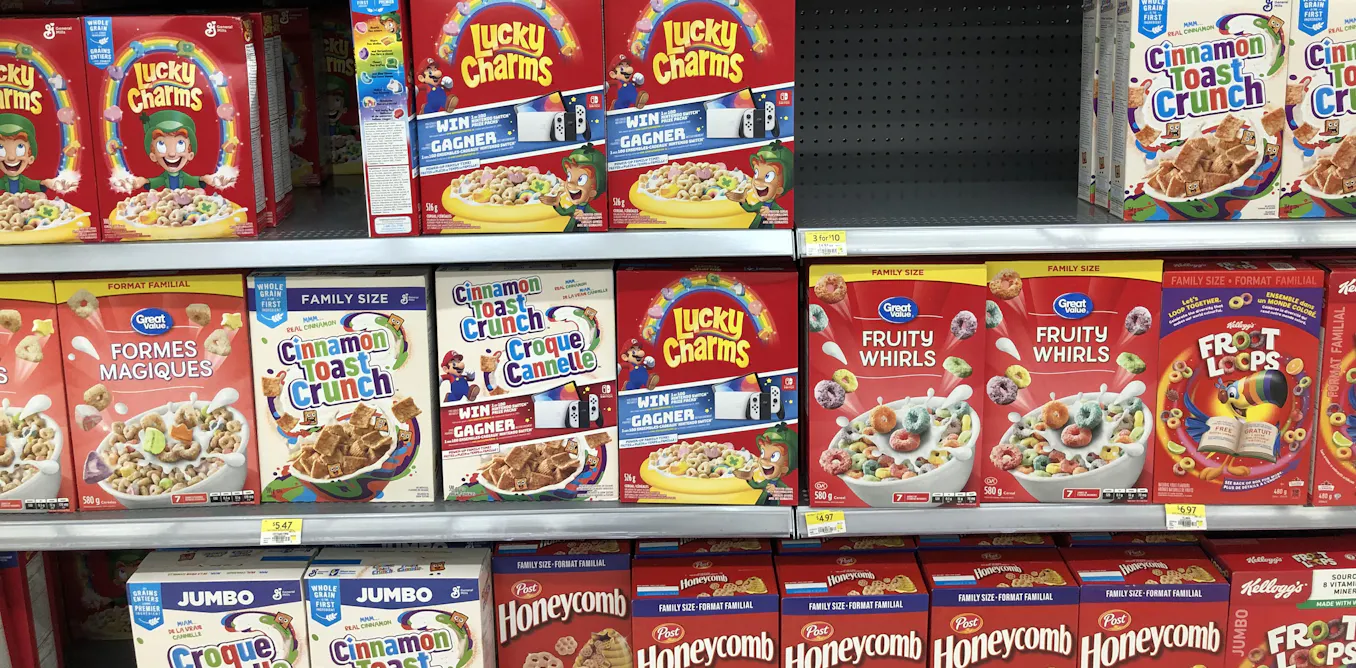
Most cereals marketed directly to children in stores contain dangerously high sugar levels that violate nutritional standards designed to protect young consumers, according to research analyzing government criteria for kid-focused food advertising.
Researchers applied established nutritional benchmarks to popular child-targeted cereals and found that 96 percent exceeded recommended sugar thresholds. Under these government-developed marketing guidelines, none of the examined cereals would qualify for advertising to children.
The gap between marketing promises and nutritional reality remains stark. Cereal boxes display cartoon characters, bright colors, and claims about whole grains and vitamins. Yet the products themselves deliver sugar loads that contradict dietary guidance from health authorities.
The findings reflect a broader tension in food marketing. Companies legally target children through packaging design, licensed characters, and placement in stores. Simultaneously, public health organizations and governments have established nutrition standards specifically to reduce child exposure to high-sugar products. Few products survive that scrutiny.
Children's sugar consumption directly correlates with obesity, type 2 diabetes, and dental decay. The American Academy of Pediatrics recommends less than 6 teaspoons of added sugar daily for children ages 2 and older. A single serving of many child-targeted cereals delivers half that amount or more.
Parents face a practical problem at breakfast. Options genuinely aligned with nutrition standards exist but occupy small shelf space compared to heavily marketed alternatives. The cereals with the brightest packaging and most recognizable characters consistently rank highest in sugar content.
This research adds evidence to longstanding calls for stricter regulation of food marketing to minors. Some countries have implemented mandatory nutrition labeling and advertising restrictions. The United States relies primarily on voluntary industry compliance, which has proven insufficient. The 96 percent failure rate demonstrates how ineffective current self-regulation remains when company profits depend on child appeal rather than child health.