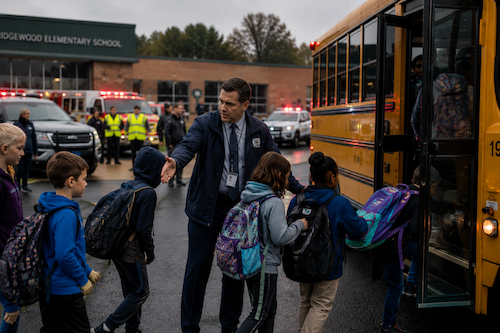
# School Safety Planning Moves Beyond Checklist
Comprehensive school safety planning delivers tangible protection when districts move beyond compliance paperwork and implement coordinated, building-specific protocols, according to recent education reporting.
Districts that treat safety planning as an operational framework rather than a regulatory checkbox see measurable results in threat detection, emergency response, and staff preparedness. The approach combines physical security measures, threat assessment teams, communication systems, and regular drills into a unified strategy tailored to each school's layout and community.
Key components include designated safety coordinators in every building, clear chains of command during emergencies, and staff training that covers not just evacuation but also de-escalation and mental health awareness. Schools report that teachers and administrators who understand their specific roles during a crisis respond faster and more effectively than those who rely on generic training.
Communication infrastructure matters significantly. Schools with integrated alert systems, secure messaging to parents, and established media protocols reduce confusion during actual emergencies. Regular tabletop exercises where staff practice decision-making in simulated scenarios strengthen response capabilities without waiting for real incidents.
Threat assessment teams, typically including administrators, counselors, school resource officers, and teachers, identify warning signs early and intervene before situations escalate. This preventive layer often proves more effective than reactive security measures alone.
Implementation requires ongoing investment. Districts must update plans annually, incorporate lessons from drills, and adapt to physical changes in buildings. Staff turnover demands refresher training for new employees. Community input from parents and students improves buy-in and reveals blind spots administrators might miss.
The gap between planning and execution determines actual safety outcomes. A comprehensive plan sitting in a file provides no protection. Districts that institutionalize safety planning as standard operations, with clear accountability and regular updates, demonstrate stronger preparedness. Teachers and students notice the difference when protocols feel practiced and purposeful rather than theoretical. That shift from checkbox compliance to operational reality defines whether