# Why AI's Environmental Footprint Won't Disappear Into Orbit
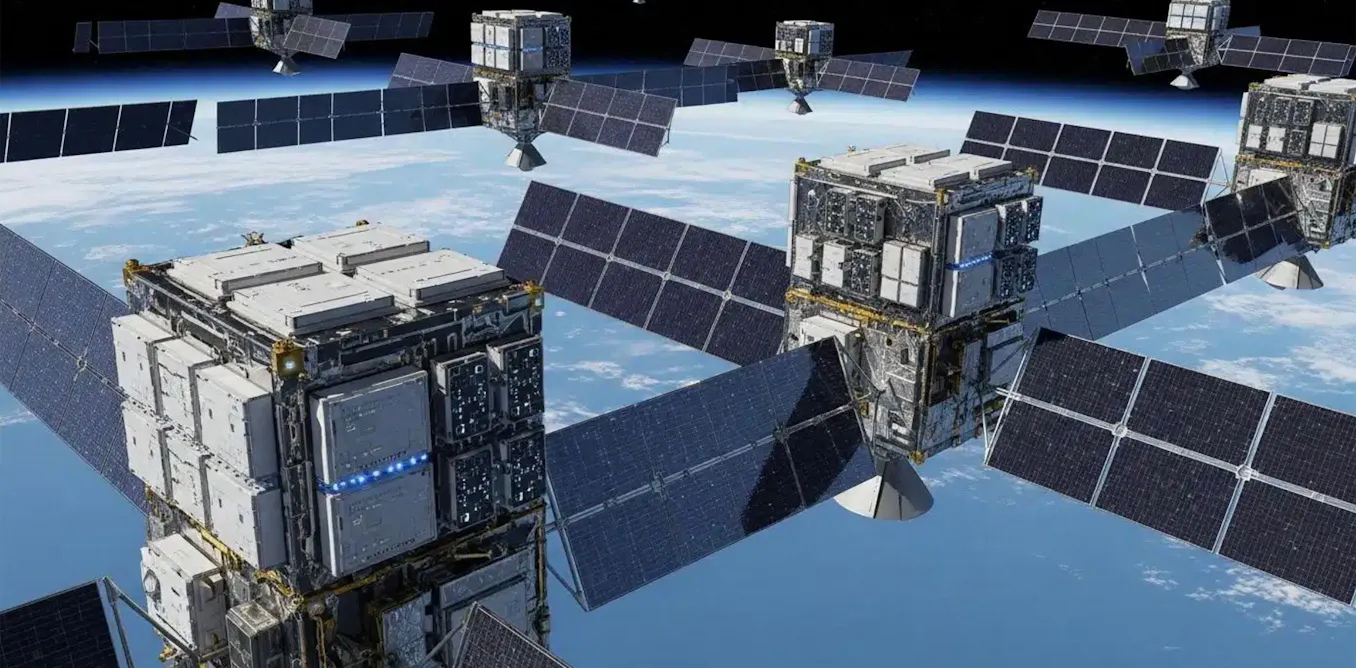
Proposals to relocate artificial intelligence data centers to space ignore the reality of environmental costs that simply shift rather than vanish. Advocates argue that orbital data centers would tap unlimited solar energy and avoid heat pollution on Earth. The logic sounds clean, but the physics and logistics tell a different story.
Launching and maintaining space-based infrastructure requires massive energy expenditures. Each rocket launch burns fossil fuels and releases greenhouse gases into the atmosphere. Constructing data centers in orbit demands repeated missions, manufacturing in space, and ongoing resupply operations. These launch costs dwarf any energy savings gained from space-based solar collection, which faces its own efficiency challenges at extreme distances from Earth.
The cooling problem persists even in the vacuum of space. Data centers generate enormous heat. In space, removing that heat becomes harder, not easier. Radiators must dissipate energy into the void, a process less efficient than Earth-based cooling systems. Engineers would need to develop entirely new thermal management systems designed for space, adding complexity and cost without solving the underlying issue.
Supply chain complications multiply in orbit. Manufacturing semiconductor equipment, replacing failed hardware, and managing data security become exponentially harder when your infrastructure floats hundreds of miles above Earth. Accidents happen more frequently in space than in terrestrial facilities. A single server failure in orbit cannot be quickly replaced by a technician.
The narrative that space offers an escape from AI's environmental burden reflects wishful thinking rather than engineering reality. It allows tech companies and investors to imagine growth without limits and without accountability. Meanwhile, the actual solutions remain earthbound: building more efficient chips, cooling systems, and energy sources. Improving data center efficiency by 20 or 30 percent delivers immediate environmental benefits. Funding space launches for speculative infrastructure diverts resources from proven approaches.
Education policymakers and administrators evaluating AI