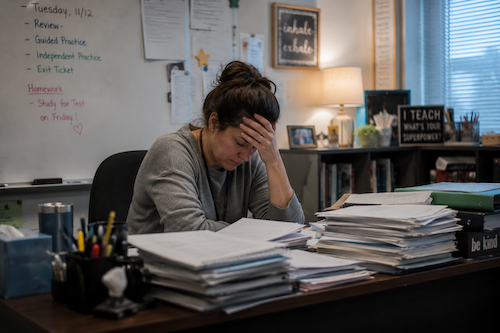
Teacher stress remains significantly higher than in other professions, despite a modest decline in 2026. Survey data shows teachers report substantially worse well-being and higher stress levels compared to similar working adults in other fields.
The problem extends beyond stress alone. Teachers report lower pay relative to comparable positions, with many taking second jobs to make ends meet. Out-of-pocket classroom spending drains additional resources from already strained household budgets. These financial pressures compound the emotional toll of teaching.
The 2026 decline in teacher stress, while measurable, masks a deeper crisis. Teachers continue experiencing burnout at levels that far exceed their peers in other professions. This disparity reflects systemic issues in how schools support educators and compensate their work.
Burnout carries real consequences for schools and students. Teachers experiencing high stress report lower job satisfaction and increased turnover. Districts lose experienced educators to burnout, creating continuity gaps in classrooms and forcing schools to hire and train replacements at greater expense.
The root causes remain unaddressed. Inadequate salary schedules force teachers to supplement income elsewhere, reducing their availability for lesson planning and professional development. Classroom funding shortfalls place the burden on teachers' personal finances to purchase supplies students need. Administrative demands and behavior management challenges add layers of stress that minimal systemic support relieves.
Recovery requires concrete action. School districts must raise teacher salaries to competitive levels within their regions. Adequate per-pupil spending for classroom materials eliminates the expectation that teachers subsidize basic supplies. Smaller class sizes and additional support staff reduce the behavioral and instructional management burden teachers carry alone.
The 2026 data suggests conditions stabilized rather than improved. A modest stress decline does not address the underlying structural problems that make teaching uniquely demanding compared to other professions. Without targeted policy changes addressing compensation, working conditions, and resource allocation, teacher burnout will likely persist at elevated