# Project-Based Learning Reshapes How Students Learn Math Through Real-World Design
Schools increasingly use project-based learning to teach mathematics by connecting abstract concepts to tangible design challenges. One approach involves having students design functional backpacks, a real-world project that requires them to apply geometry, measurement, budgeting, and spatial reasoning.
The method addresses a persistent problem in math education: students memorize procedures without understanding why they work. When students design backpacks, they must calculate dimensions, estimate costs, select materials, and solve optimization problems. These tasks demand genuine mathematical thinking rather than rote computation.
Elementary and middle school math foundations prove critical. Each concept builds on previous ones, so students must grasp material deeply before progressing. Traditional instruction often moves too quickly, leaving gaps. Project-based learning slows the pace intentionally, embedding math concepts within problems students find meaningful.
Research supports this approach. Students working on design projects demonstrate stronger conceptual understanding and better retention than peers in conventional classes. They develop problem-solving habits and learn to verify whether their answers make practical sense. A backpack design project reveals whether students truly understand measurement or simply followed steps blindly. When a calculation produces a backpack pocket too small to hold anything, students immediately recognize the error and adjust.
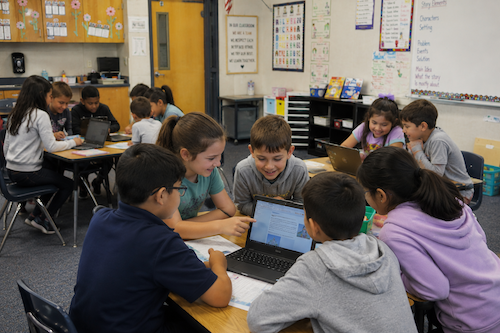
This pedagogical shift requires teacher training and curriculum redesign. Educators must facilitate inquiry rather than deliver direct instruction. Classroom time focuses on guiding students through design cycles, troubleshooting, and reflection rather than lecturing formulas.
Districts implementing project-based math report increased student engagement alongside improved test scores. Students see math as a tool for solving real problems instead of abstract content disconnected from their lives. They develop persistence when projects require iteration and refinement.
The approach works across ability levels. Struggling students gain confidence tackling concrete tasks, while advanced students deepen learning through complexity. A simple backpack project scales easily. Advanced