# An Updated Guide to Questioning in the Classroom
Teachers who ask effective questions unlock deeper student thinking and reveal whether learning actually happened. Research shows that the quality of classroom questions directly correlates with student comprehension, critical thinking skills, and long-term retention.
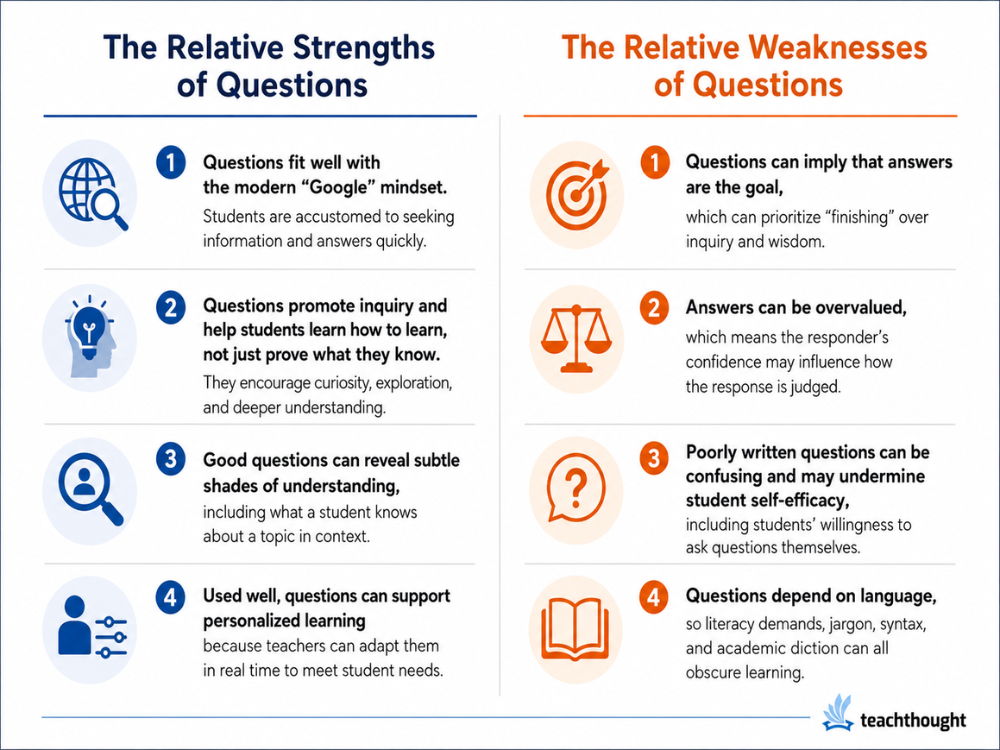
The distinction between surface-level and deep questions matters. Surface questions ("What is photosynthesis?") prompt memorization. Deep questions ("Why does photosynthesis matter for ecosystems?") push students toward analysis and application. When teachers ask students to justify answers, compare ideas, or predict outcomes, they create space for authentic understanding to emerge.
Timing and pacing shape questioning effectiveness. Teachers who pause after asking a question, waiting at least three to five seconds before accepting answers, receive longer and more thoughtful responses. Students need processing time. Rushing to fill silence undercuts the entire purpose.
The research also highlights question distribution. Teachers often call on the same students repeatedly, usually high performers. Deliberate questioning strategies that reach all students, including those who don't raise hands, ensure equitable participation and surface misconceptions early. Cold-calling, when paired with psychological safety and structured response time, works better than volunteers alone.
Question sequencing matters too. Starting with recall questions can establish baseline knowledge, but effective lessons progress toward analysis, evaluation, and synthesis. Bloom's taxonomy remains a practical tool for designing question sequences that build complexity.
Modern classrooms benefit from varied questioning formats: think-pair-share activities, written response systems, discussion protocols, and individual reflection. These approaches accommodate different thinking styles and give all students genuine opportunity to formulate answers.
Teachers who view questions as assessment tools gain real-time insight into gaps in understanding. A student's incorrect answer reveals exactly where instruction needs adjustment. This transforms questioning from a routine activity into a responsive teaching strategy.
The skill of questioning develops over time. Teachers who reflect on their own questioning patterns, record