# How VAR Is Changing Soccer and Its Referees
Video Assistant Referee technology has fundamentally altered how soccer officials make decisions, introducing precision that previously did not exist in the sport. VAR systems now catch infractions at microscopic levels, identifying offsides by centimeters or detecting contact that human eyes miss in real time.
This technological shift raises a core tension. VAR delivers technical accuracy. A player's toe crossing the offside line receives a flag. Contact in the penalty box gets reviewed. The system does exactly what engineers designed it to do: reduce clear errors.
But accuracy alone does not determine whether VAR improves the sport. Fans and analysts increasingly question whether catching an offside by a toe aligns with soccer's spirit or intent. The law exists to prevent players from gaining unfair advantage, not to eliminate every millimeter of advantage possible.
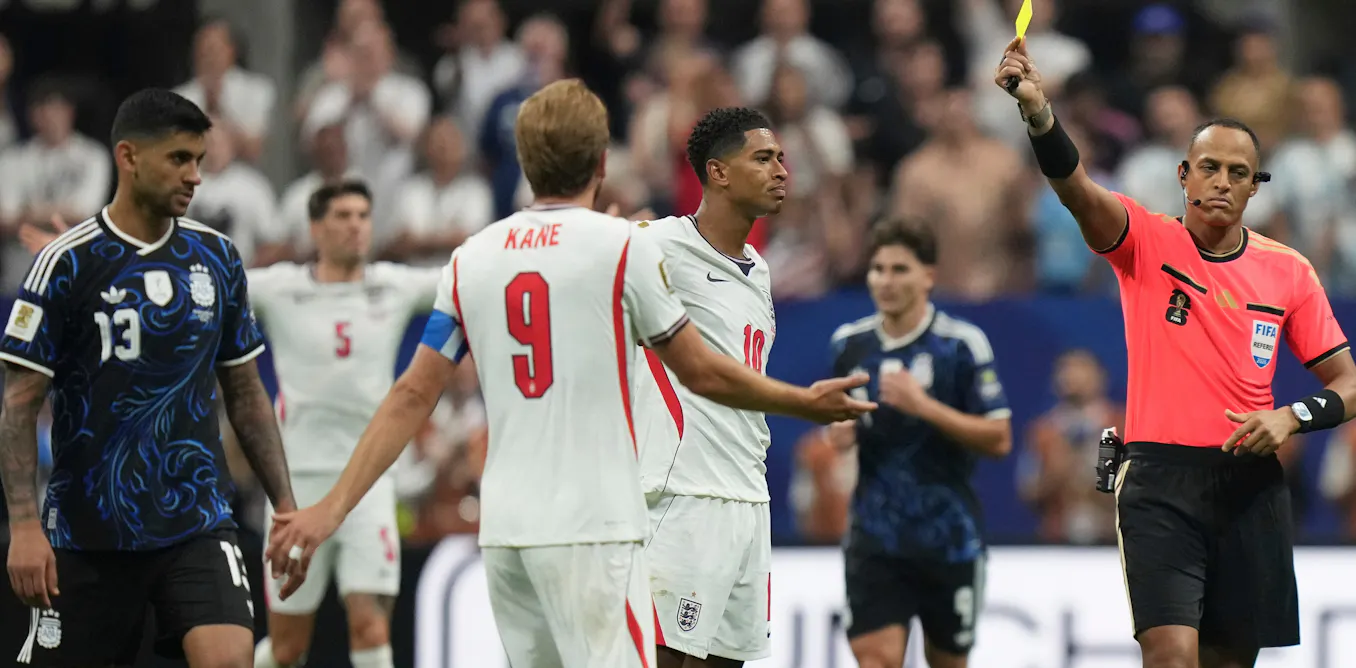
Referees face a new role. Rather than making split-second field decisions that stand as final, they now serve as intermediaries between VAR officials in a booth and the action on the pitch. Some referees report this creates uncertainty. Others describe empowerment. The decision-making process has become collaborative in ways that sometimes slow the game and disrupt rhythm.
Different leagues have approached VAR implementation differently. The Premier League uses it conservatively. MLS and other leagues adopt stricter interpretations. These variations highlight an ongoing debate about what VAR should actually do.
The philosophical question persists: Does soccer benefit from absolute precision, or does it lose something when every marginal call triggers a review? Players, coaches, and supporters hold different answers. What remains clear is that VAR has moved beyond testing phase into permanent fixture status. The sport now operates under a new standard of accountability, whether that standard matches what fans ultimately want or not.