# When STEM Lessons Are Too Easy, Students Stop Thinking
Teachers often equate busy work with engagement, but research shows that students in unchallenging STEM lessons disengage mentally even when appearing to participate actively. The problem runs deeper than surface-level activity.
When STEM instruction lacks appropriate difficulty, students shift into autopilot mode. They complete tasks mechanically without developing critical thinking skills. This happens across all grade levels, from elementary coding activities to high school physics problems.
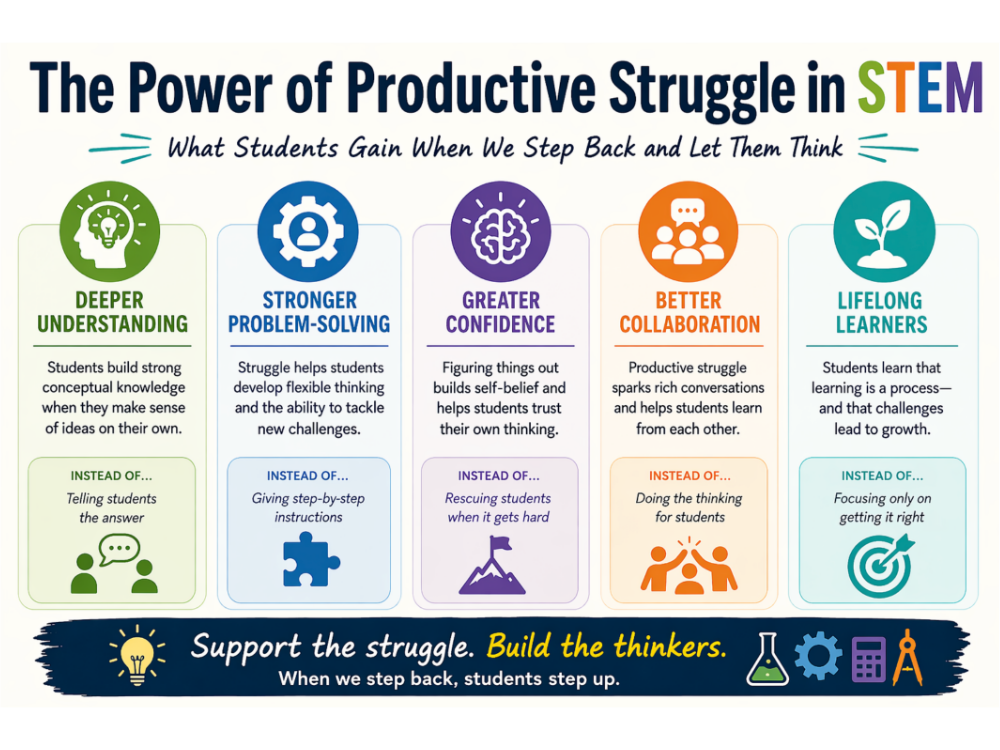
The distinction matters because real learning requires cognitive effort. Students need to struggle productively with material that stretches their current understanding. Tasks that are too easy allow students to succeed without thinking through concepts, which creates an illusion of mastery.
TeachThought researchers point out that engagement measured by time-on-task misses the actual learning. A student can spend 45 minutes on a worksheet and learn nothing. Conversely, a student wrestling with a genuinely difficult problem for 10 minutes may learn far more.
STEM teachers face pressure to keep classrooms "moving" and maintain student satisfaction. This often leads to simplified lessons that students complete quickly. But quick completion signals inadequate challenge, not instructional success.
The solution requires intentional lesson design. Teachers should build in productive struggle, where students encounter problems they cannot immediately solve. This develops persistence and deeper understanding. Scaffolding should support thinking, not replace it.
Feedback becomes critical too. When students get answers wrong on appropriately difficult tasks, that failure provides learning data. Teachers can use misconceptions to guide instruction rather than treating errors as problems to avoid through easier assignments.
Schools implementing rigorous STEM curricula report higher long-term achievement despite initial student resistance to difficulty. Students adapt when expectations remain consistently high and support is clear.
The takeaway for STEM educators: busyness is not engagement, and engagement is not learning. True