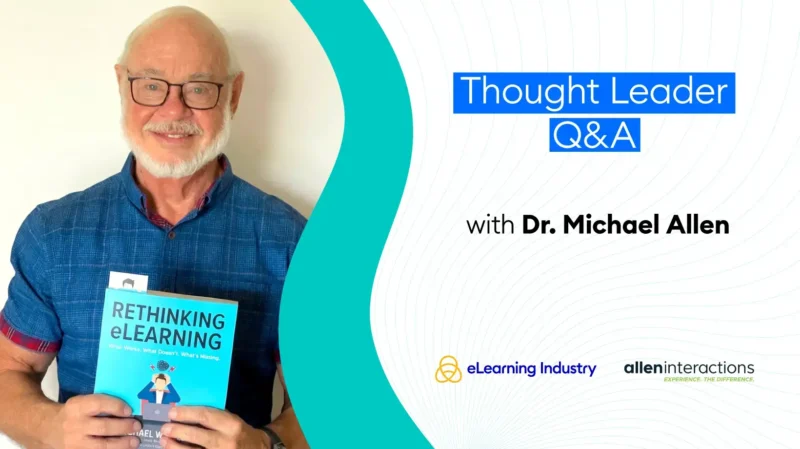
Dr. Michael Allen of Allen Interactions shared principles for designing workplace learning that combines emotional engagement with effectiveness. Allen emphasizes that training succeeds when it moves beyond information delivery to create meaningful experiences that stick with learners.
The approach centers on relevance and context. Allen argues that employees retain information better when they see direct connections to their jobs and understand why the content matters. Generic training modules fail because they lack this connection to real work challenges.
Emotional engagement drives retention and behavior change. Allen advocates designing learning around scenarios and problems employees actually face, rather than abstract concepts. When learners care about solving a problem or achieving a goal, they invest more cognitive effort and remember more.
Allen also stresses the importance of interactivity and feedback. Passive content consumption, whether video or text, produces weaker outcomes than active problem-solving and practice. Learners need opportunities to apply knowledge, make mistakes in low-stakes environments, and receive corrective feedback.
The principles extend to timing and format. Microlearning modules that fit into work schedules outperform lengthy courses that pull people away from jobs. Allen recommends spaced repetition, where learners encounter core concepts multiple times across weeks or months, rather than cramming everything into one session.
Allen Interactions, Allen's firm, applies these principles to corporate training design. The company works with organizations to transform compliance training, onboarding, and skills development into programs that actually change performance.
For HR and learning leaders, Allen's framework offers practical guidance. Instead of measuring success by completion rates, organizations should track behavior change and business outcomes. A compliance course nobody remembers fails the organization, even if 100 percent of employees finish it.
This approach requires rethinking how companies build learning programs. It demands understanding learner needs, designing for real problems, and building emotional hooks into content. The payoff comes in better retention, faster performance improvement, and employees who