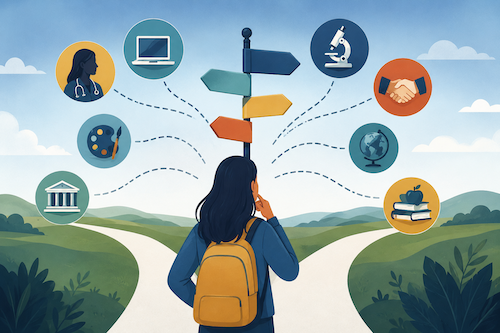
High school seniors face a gap between classroom learning and real-world readiness. A post-graduation readiness report by YouScience reveals that most graduating seniors lack the decision-making skills needed to navigate their first steps after graduation.
The research identifies a mismatch between traditional curricula and what students actually need. Schools teach academic content but often neglect decision education, the structured study of how to make informed choices about careers, finances, and major life transitions. This gap leaves students unprepared for concrete next steps, whether college enrollment, vocational training, or job placement.
Career and technical education (CTE) programs offer a partial solution. By aligning CTE with decision education, schools can equip students with both practical skills and the judgment to apply them. CTE teaches hands-on competencies in fields like health care, construction, and information technology. Decision education teaches students frameworks for evaluating options, weighing trade-offs, and executing plans.
The YouScience report suggests this combination works. Students who receive both CTE and decision education report higher confidence in post-graduation transitions. They understand not just what jobs exist but how to assess whether a path fits their abilities and goals.
The hidden curriculum gap extends beyond career readiness. Students graduate without explicit training in personal finance decisions, educational pathway choices, or how to adjust plans when circumstances change. These gaps disproportionately affect low-income students and first-generation college-goers, who lack family networks to fill the void.
Districts implementing this approach report measurable gains. Schools integrating decision-making frameworks into CTE see improved student outcomes: higher college enrollment, better job placement, and reduced undecided students at graduation.
The takeaway for educators and policymakers is straightforward. Traditional academics matter, but schools must also teach students how to decide. By pairing CTE instruction with explicit decision education, schools close the readiness gap and