# Lakes Release Ancient Carbon from Congo Basin Peatlands
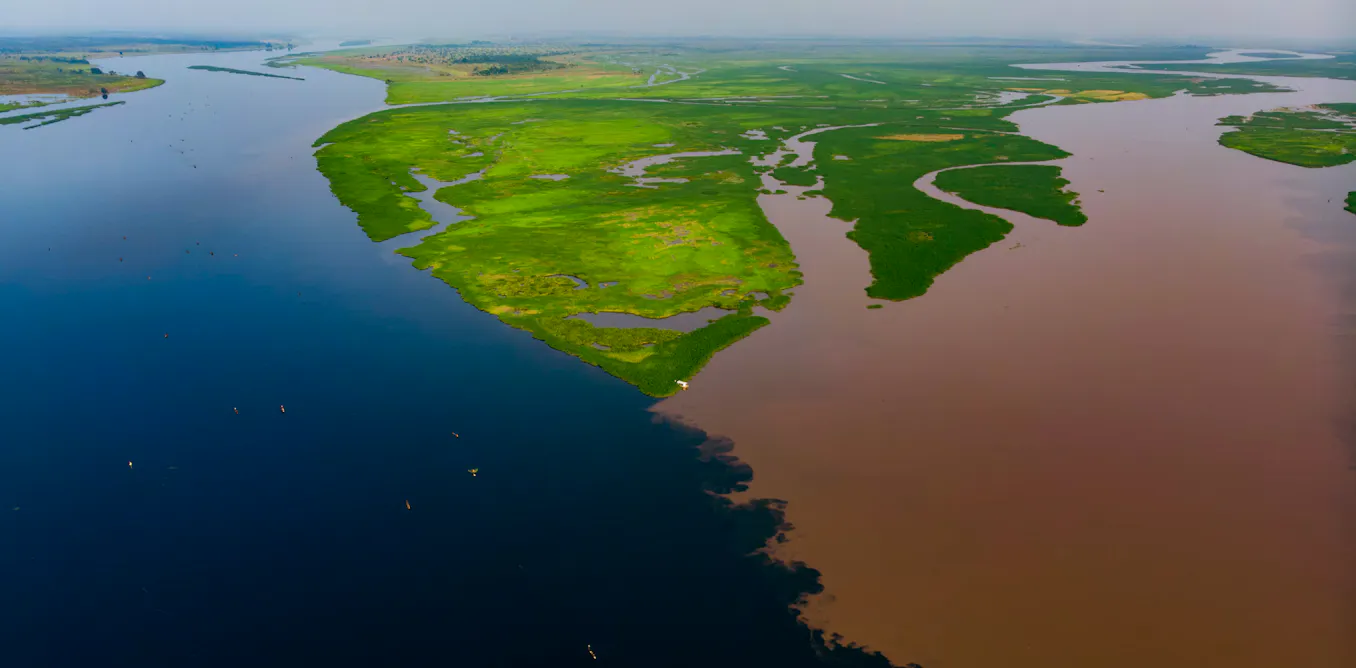
Two lakes in the Congo Basin are emitting carbon that dates back thousands of years, according to research highlighting a previously unknown pathway for ancient greenhouse gases to enter the atmosphere. Scientists discovered that tropical peatlands surrounding these lakes release stored carbon through water systems, creating what researchers describe as "breathing" lakes that cycle this ancient material into the air.
The finding challenges existing models of carbon cycling in tropical regions. Peatlands store vast quantities of carbon accumulated over millennia. When water flows through these wetland systems, it carries dissolved organic carbon directly into lakes, where microbial processes convert it to carbon dioxide and methane. Both gases then escape to the atmosphere.
The Congo Basin contains some of Earth's largest peatland reserves, holding an estimated 30 billion tons of carbon. This discovery raises questions about how climate change might accelerate carbon release from these regions. As temperatures rise and precipitation patterns shift, the rate at which peatlands feed carbon into lakes could increase, creating a feedback loop that amplifies atmospheric warming.
The research team used radiocarbon dating to determine the age of carbon emissions, confirming that much of what the lakes release originated from peat deposited centuries or even millennia ago. This ancient carbon represents a carbon sink that was previously considered stable and sequestered from the atmosphere.
The implications extend beyond climate science. The discovery suggests that conservation efforts focusing solely on protecting peatlands may overlook the role of connected water systems in carbon dynamics. Effective climate policy requires understanding these ecosystem linkages.
The study underscores why tropical peatland protection matters for global carbon budgets. As nations develop climate mitigation strategies, accounting for carbon pathways through water systems becomes essential. The Congo Basin's role in global carbon cycles deserves greater attention from policymakers and climate researchers alike.