# From Screen To World: 5 Ways To Use AI To Spark Hands-On Learning In K–12 Classrooms
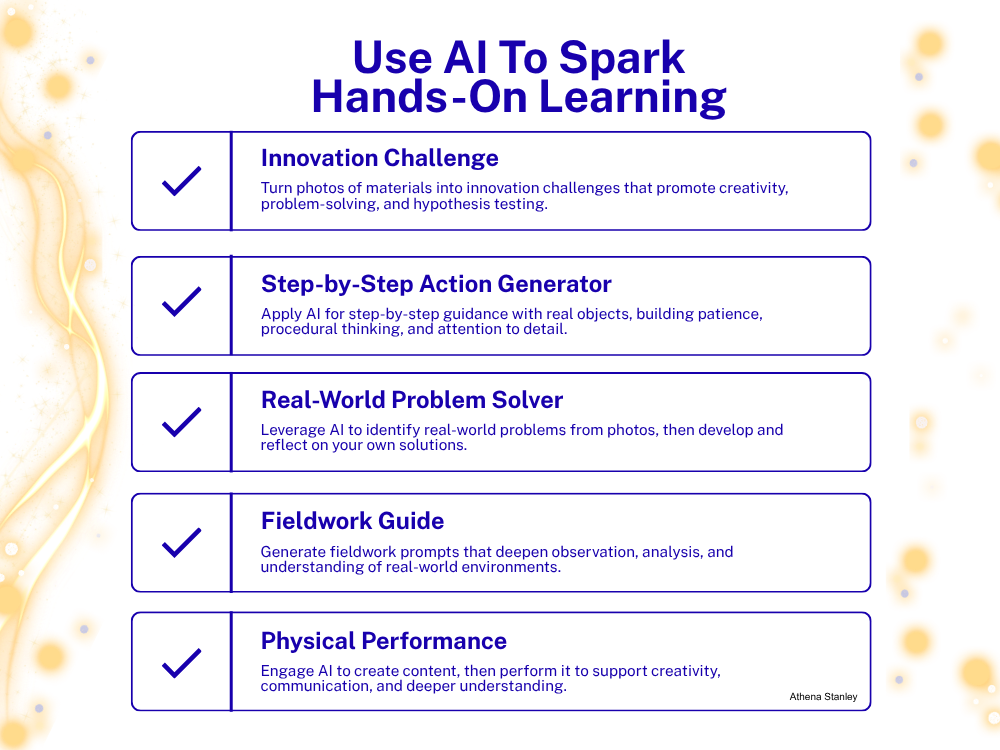
Teachers increasingly integrate AI tools into classroom instruction to bridge the gap between digital interaction and real-world problem-solving. One practical approach involves having students photograph their physical environment, then use AI to identify problems without receiving immediate solutions. This method pushes students beyond passive screen time.
The strategy works across settings. Students can document issues at school, in their homes, or within their communities. They submit photos to AI systems and ask the tool to analyze what problems exist in the image. By withholding solutions, teachers force students to engage in critical thinking before moving to action. Students must interpret AI feedback, evaluate the identified problems, and develop their own approaches.
This approach addresses a persistent challenge in K-12 education: students often struggle to connect classroom learning to tangible real-world applications. Hands-on learning improves retention and develops practical problem-solving skills. AI serves as a neutral observer that can identify issues students might otherwise miss, then requires students to take ownership of solutions.
The method also encourages environmental awareness. When students photograph their immediate surroundings and analyze them through an analytical lens, they become more observant. They notice infrastructure problems, safety hazards, accessibility barriers, or community needs they previously overlooked.
Teachers implementing this strategy report that students become more invested in outcomes. Once students identify a real problem in a space they inhabit, motivation to solve it increases. A student might photograph a poorly lit hallway, ask AI to confirm safety concerns, then work with peers to design better lighting solutions or present findings to school administrators.
This represents a broader shift in AI classroom use. Rather than treating AI as an answer machine that delivers instant information, educators deploy it as a thinking partner. AI prompts inquiry, flags details, and creates friction that forces students to engage deeper thinking.