# What U.S. and International Classrooms Teach About Math Instruction
A mathematics teacher witnessed a stark gap in student understanding. One student could execute complex equations with precision but couldn't explain the reasoning behind the methods used. This disconnect reveals a widespread problem in math classrooms across the United States.
The anecdote points to a fundamental shift needed in how educators teach mathematics. Students often learn procedures without grasping the underlying concepts. They memorize steps rather than understand why those steps work. This approach produces students who can pass tests but struggle when faced with novel problems or asked to apply math in real-world contexts.
International classrooms offer contrasting models. Countries like Singapore, Japan, and Finland prioritize conceptual understanding alongside procedural fluency. These nations emphasize problem-solving approaches that require students to explain their thinking, justify their methods, and connect new concepts to prior knowledge. Their students learn not just what to do, but why it matters.
Research from the Program for International Student Assessment (PISA) and Trends in International Mathematics and Science Study (TIMSS) shows that nations emphasizing conceptual understanding consistently outperform those focused narrowly on procedural skills. The difference emerges early and compounds through secondary education.
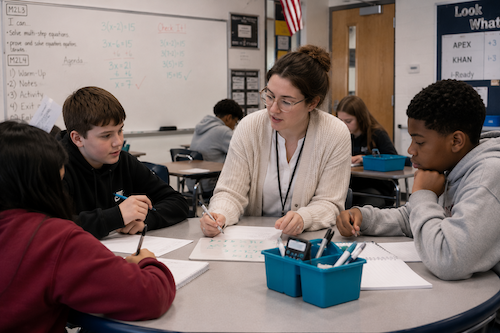
Implementing these lessons in U.S. schools requires deliberate changes. Teachers need time to move away from lecture-based instruction toward inquiry-based and collaborative learning. Professional development programs must help educators facilitate discussions where students explain mathematical reasoning. Curriculum materials should present multiple strategies for solving problems, allowing students to compare approaches and build deeper understanding.
Schools also benefit from shifting assessment practices. Tests that measure only procedural accuracy miss the conceptual understanding students need. Assessments should include open-ended problems requiring explanation and justification.
The payoff extends beyond test scores. Students who understand mathematical concepts develop confidence, flexibility in problem-solving, and genuine interest in the subject. They