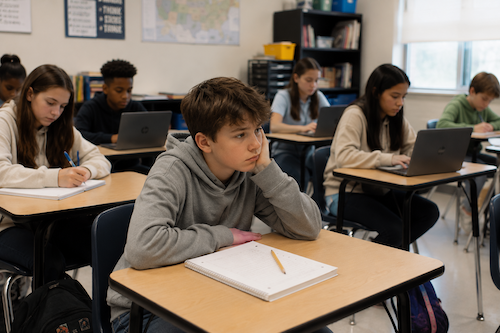
Student disengagement has reached a critical point in classrooms nationwide. Teachers report that students are tuning out at higher rates than before, signaling a deeper problem with how learning experiences are designed rather than simply student behavior or motivation issues.
The challenge extends beyond traditional attention spans. Educators increasingly recognize that disengagement reflects misalignment between classroom instruction and how students actually learn. One-size-fits-all lectures and standardized pacing fail to capture the diverse needs, interests, and learning styles present in any given classroom. Students disengage when content feels irrelevant or when instruction ignores their preferred modes of engagement.
Research points to specific factors driving disengagement. Passive learning environments produce lower retention and motivation. Students who sit passively while teachers deliver information report less connection to material. Interactive elements, collaborative problem-solving, and real-world application create stronger engagement. Additionally, personalized learning pathways that allow students to progress at their own pace and explore topics aligned with their interests produce measurably better outcomes.
The post-pandemic classroom has intensified these patterns. Students returning to in-person learning after extended remote instruction show distinct engagement patterns. Some have difficulty readjusting to traditional classroom structures. Others expect more flexibility and digital integration based on their recent experience.
Schools implementing changes report measurable results. Teachers who redesign lessons around student input, incorporate project-based learning, and integrate technology purposefully see engagement improve. Classroom environments that blend direct instruction with collaborative work, peer teaching, and student agency hold attention more effectively.
Rethinking classroom design requires investment in teacher training, curriculum revision, and often physical space reconfiguration. Schools must move beyond the assumption that teacher-centered instruction alone drives learning. Instead, classrooms function best as spaces where students actively construct knowledge through varied modalities, where their voices shape what and how they learn.
The shift demands time and resources. Yet schools that priorit