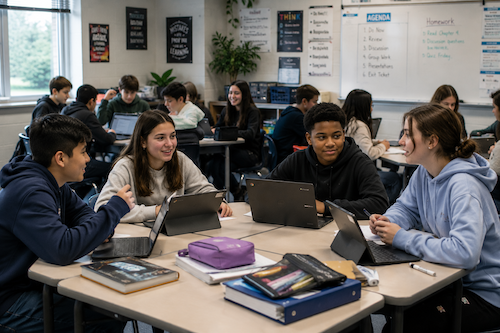
Schools must give students greater control over their learning while making education data more transparent and accessible to all stakeholders, according to education leaders pushing for systemic change.
Student agency, the ability for learners to make meaningful choices about their education, strengthens growth mindset and helps transfer classroom knowledge into real-world skills. When students participate in decisions about their learning paths, they develop ownership and motivation that test scores alone cannot measure.
The push for expanded student agency challenges traditional top-down education models where administrators and teachers dictate curriculum and pacing without student input. Instead, schools are experimenting with student-led conferences, choice boards in assignments, student-designed projects, and advisory systems where learners help shape their educational experience.
Equally important is accessible data. Currently, student information systems remain siloed behind school portals that many families struggle to navigate. Teachers often lack real-time visibility into student progress across classes. Parents receive fragmented reports that don't paint complete pictures of their children's strengths and challenges. Students themselves rarely see their own learning data in formats they understand.
Breaking down these data barriers requires schools to invest in transparent platforms that present information clearly to students, families, and educators. When students can access their own performance data, they become active participants in monitoring progress rather than passive recipients of grades announced after assignments close.
This shift demands cultural change. Schools must move beyond viewing students as vessels to fill with content. Educators need professional development to facilitate student choice rather than control it. Administrators must allocate resources toward systems that support transparency rather than protect gatekeeping structures.
Districts implementing these changes report increased engagement and improved outcomes. Students who shape their learning show higher completion rates and develop metacognitive skills that serve them beyond school. Families with accessible data feel more connected to their children's education and can provide better support at home.
The intersection of student agency and data accessibility creates conditions where young people see themselves as capable lear