# Building Math Skills Through Real-World Design Projects
Project-based learning (PBL) is reshaping how students engage with mathematics by anchoring abstract concepts in tangible, real-world design challenges. Schools implementing this approach are moving away from traditional drill-and-practice methods toward hands-on projects that require students to apply math skills to solve actual problems.
One example involves students designing functional backpacks. Rather than completing worksheets about measurement and geometry, students work through the full design process: calculating fabric dimensions, determining weight capacity, optimizing compartment layouts, and estimating production costs. These tasks demand competency in measurement, fractions, area, volume, and basic budgeting. Students see immediately why math matters because they cannot complete the project without understanding these concepts.
The shift addresses a persistent challenge in mathematics education. Elementary and middle school students often memorize procedures without grasping underlying concepts, leaving gaps that compound in later grades. When each concept builds on the last, weak foundations crumble under pressure. PBL reverses this by forcing conceptual understanding first.
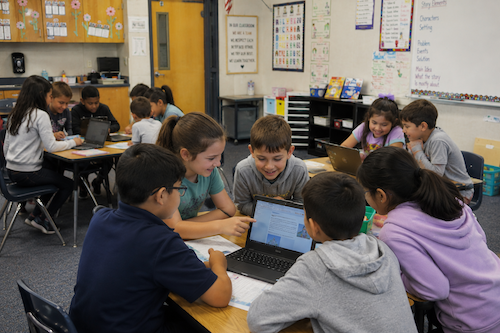
Teachers report that project-based approaches increase engagement and retention. Students take ownership of their work when designing something real rather than solving abstracted problems. They collaborate across skill levels, with peer teaching reinforcing understanding for both mentor and learner. The projects also reveal misconceptions immediately. A student who miscalculates backpack dimensions sees the error when the prototype fails, creating powerful motivation to revisit the math.
Schools using PBL in math have documented improved performance on both problem-solving and computational assessments. Students develop confidence not just in calculating answers but in applying mathematics to new situations.
The approach requires significant teacher preparation. Educators must design projects with embedded math standards, manage longer project timelines, and assess learning differently than traditional tests allow. Professional development and curriculum redesign demand resources many districts lack.
Despite implementation challenges, PB