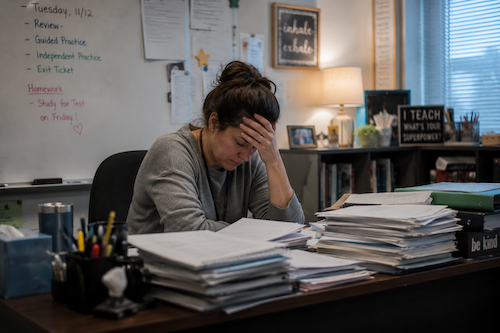
Teacher burnout remains at historically elevated levels despite a modest decline in stress in 2026, according to new data. Teachers report stress levels significantly above those of similar working adults, along with worse overall well-being and greater mental health challenges.
The data reveals a workforce under sustained pressure. Teachers cite multiple overlapping burdens: inadequate compensation, the need to work second jobs to make ends meet, and the requirement to spend their own money on classroom supplies. These financial pressures compound the emotional and physical toll of classroom work itself.
The 2026 improvement, while notable, reflects marginal gains rather than systemic relief. Teachers remain substantially more stressed than comparable professionals in other fields. This gap points to conditions specific to the teaching profession that general economic improvements have not addressed.
School districts face a retention crisis as a result. Experienced educators leave the profession citing burnout, while potential teachers pursue careers offering better pay, more stable schedules, and less emotional labor. The pipeline problem threatens student learning, particularly in high-need schools serving low-income communities.
Pay remains a central issue. Many states have not meaningfully raised teacher salaries to match inflation or to compete with other professions requiring similar education levels. Teachers in numerous districts earn less in real dollars than they did a decade ago. The expectation that teachers will fund classrooms from personal budgets, sometimes spending $500 or more annually on materials, adds insult to financial injury.
Mental health deterioration accompanies these structural problems. Teachers report higher rates of anxiety, depression, and burnout-related conditions than the general workforce. The National Education Association and American Federation of Teachers both document rising numbers of educators seeking mental health support.
Schools cannot solve teacher burnout through wellness programs alone. Meaningful relief requires higher base salaries, adequate classroom resources, reduced class sizes, and genuine administrative support for teacher autonomy. Until districts and policymakers address these fundamentals, the