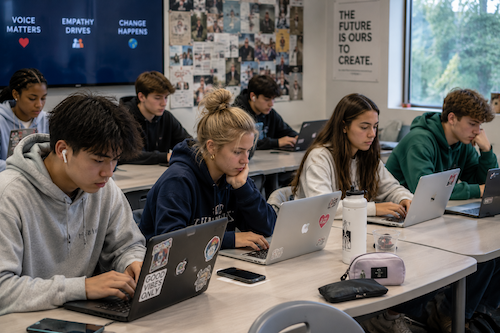
Gen Z students hold surprisingly positive views about artificial intelligence despite widespread public anxiety about the technology's impact on jobs and society, according to a new report examining the generation's career aspirations and values.
The survey, which ranks Gen Z's top 100 dream colleges and preferred employers, reveals that young people see AI not primarily as a threat but as a tool for their futures. This optimism stands in contrast to broader concerns among parents, educators, and policymakers about AI disrupting the job market and educational integrity.
The data matters because Gen Z will enter a workforce shaped by AI integration. Their willingness to embrace the technology could influence how schools teach about and incorporate AI into curriculum. Colleges and employers that appear responsive to AI opportunities may attract stronger Gen Z talent.
The report also examines the values shaping Gen Z career decisions. Beyond AI attitudes, the generation prioritizes factors like corporate social responsibility, workplace culture, and opportunities for meaningful work. These preferences signal what institutions need to emphasize when recruiting and retaining Gen Z students and employees.
The findings emerge during an unsettled period for young people. Economic uncertainty, student debt concerns, and rapid technological change create genuine planning challenges. Yet this survey suggests Gen Z approaches their futures with pragmatism rather than pessimism about AI specifically.
For educators, the takeaway is clear. Rather than framing AI as something to fear or police, schools might focus on teaching students how to work alongside these tools effectively. Gen Z's baseline optimism provides an opening for schools to develop robust AI literacy programs that prepare students for collaborative human-AI work environments.
The question now centers on whether institutions can meet this generation's expectations. Colleges and employers will need to demonstrate authentic integration of AI into career preparation and advancement pathways. Gen Z's optimism offers opportunity, but only if schools and employers respond with substantive action rather than surface-level commitments.