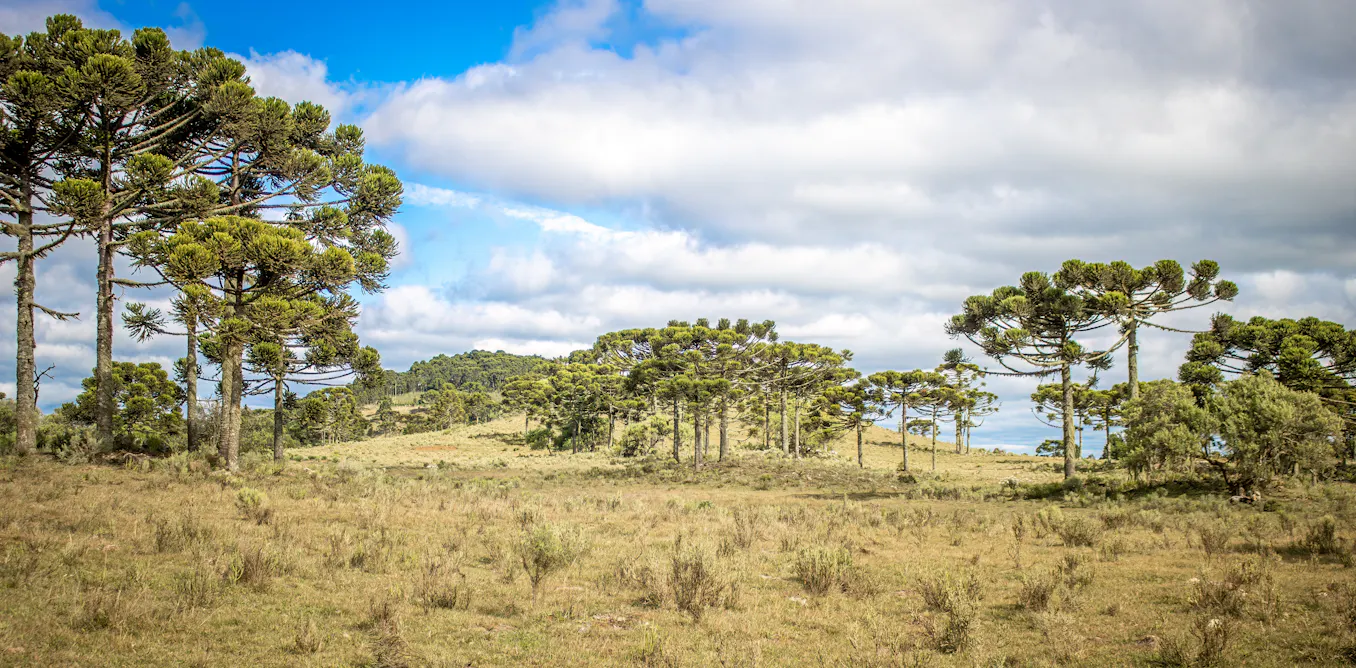
Brazil's highland forests show a complex 6,000-year history shaped by both climate shifts and Indigenous land management, according to new research from pollen records in the region.
Scientists studying prehistoric pollen deposits found that forest composition changed not simply in response to broad climatic swings, but through deliberate Indigenous practices. The findings challenge the common assumption that forests are purely natural systems responding only to weather patterns and temperature fluctuations.
The research reveals that Indigenous peoples actively managed these highland ecosystems through controlled burning, selective harvesting, and cultivation practices. These interventions altered which plant species thrived, how densely forests grew, and which areas remained open for cultivation. The pollen evidence shows these management strategies persisted across millennia, creating stable forest-grassland mosaics that supported both biodiversity and human communities.
Climate change did play a role, particularly during periods of drought or increased rainfall. But the pollen records demonstrate that Indigenous stewardship often buffered forests against dramatic ecological collapse during climate shifts. Communities adapted their management practices to changing conditions, maintaining forest health through techniques refined over generations.
This work matters for contemporary conservation and climate resilience. As deforestation accelerates in Brazil, recognizing how Indigenous peoples sustained these ecosystems offers evidence-based models for forest protection. Current protected areas often exclude Indigenous communities or minimize their traditional practices, despite the research showing these practices maintain ecological stability.
The study supports growing momentum to recognize Indigenous land rights as central to climate solutions. Brazil's highland forests represent just one example. Similar pollen research across the Amazon and other biomes increasingly documents this Indigenous-forest co-evolution.
For policymakers and conservationists, the implication is direct: excluding Indigenous peoples from forest management weakens the very systems that climate change threatens most. Integrating traditional ecological knowledge with scientific monitoring offers the most effective path for protecting these forests while addressing climate adaptation.