# Whataboutism: A Rhetorical Strategy Students Need to Recognize
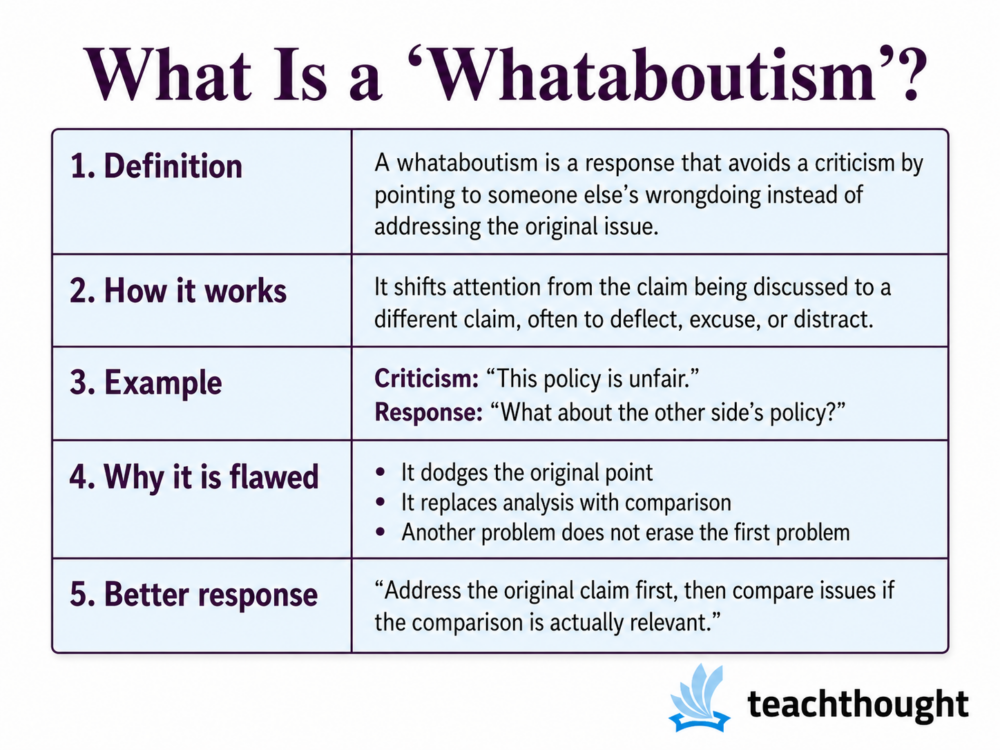
Whataboutism is a deflection tactic that sidesteps direct engagement with a claim by redirecting attention elsewhere. Rather than addressing the original argument, the person using whataboutism pivots to a different issue entirely, often one that sounds related but fundamentally changes the conversation.
The term gained prominence in political discourse but appears regularly in classroom debates, social media arguments, and everyday discussions. Understanding whataboutism matters for students learning to evaluate arguments and identify logical fallacies.
Here is how it works in practice. If someone argues that a school district failed to meet reading proficiency targets, a whataboutism response might say: "But what about the math scores that improved?" The original criticism gets ignored. The conversation shifts to a different metric instead of addressing whether reading performance fell short of expectations.
This tactic frustrates productive debate because it prevents resolution of the initial point. Both claims might be true, but whataboutism uses the second claim to obscure rather than to build a fuller picture. It creates confusion about what is actually being discussed.
Educators increasingly flag whataboutism as a critical thinking concern. Students who recognize this pattern can evaluate arguments more carefully. They learn to identify when someone avoids accountability by pointing elsewhere. They develop the skill to ask: "That's interesting, but does that address my original question?"
TeachThought, an education publication, includes whataboutism in its coverage of rhetorical strategies students encounter. Teachers use this framing to help students distinguish between valid counterarguments, which directly engage with the original claim, and deflection, which abandons it.
Recognizing whataboutism builds media literacy and argumentation skills. Students who understand this pattern spot it in political speeches, news coverage, and advertising. They become more resistant to manipulation through misd