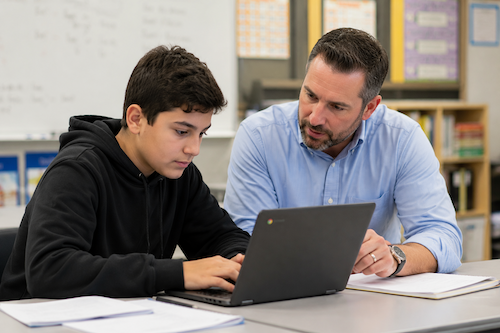
A high school teacher in Illinois argues that artificial intelligence feedback cannot replace the human relationships that drive student learning and growth.
The educator, reflecting on recent student conferences, emphasizes that meaningful feedback requires genuine human connection. During a conversation with a student named Steven about a final project, the teacher recognized something no algorithm captures: the way personal dialogue helps students feel seen, challenged, and understood by their instructors.
The distinction matters. AI systems can score assignments quickly and flag common errors. They can deliver standardized suggestions. But they cannot read a student's hesitation in a conference room, adjust tone based on emotional cues, or offer the kind of mentorship that builds confidence and resilience.
Teachers nationwide face pressure to adopt AI tools for efficiency. Budget constraints and rising class sizes make automation tempting. Districts see potential to lighten grading loads and provide instant feedback. Yet the teacher's argument reveals a core tension in education technology: speed and scale often come at the cost of the relationships that research shows predict student success.
Studies on student achievement consistently link positive teacher-student relationships to improved outcomes, higher engagement, and better long-term academic trajectories. AI feedback skips this foundation. A student receiving automated comments may complete the assignment. A student receiving feedback from a teacher who knows them, believes in them, and takes time to explain their mistakes learns something deeper about effort and growth.
The Illinois teacher is not rejecting technology outright. Rather, the argument centers on appropriate use. Tools like AI can handle routine tasks like initial essay scoring or identifying patterns across a class's work. That efficiency frees teachers for what machines cannot do: the one-on-one conferences where breakthroughs happen, where a struggling student discovers they are capable, where a teacher's belief in a student changes their trajectory.
The question schools face is not whether to use AI, but where to deploy it. Using AI to replace teacher feedback wastes the human resource