# AI Tools Help Students Move From Observation to Real-World Problem-Solving
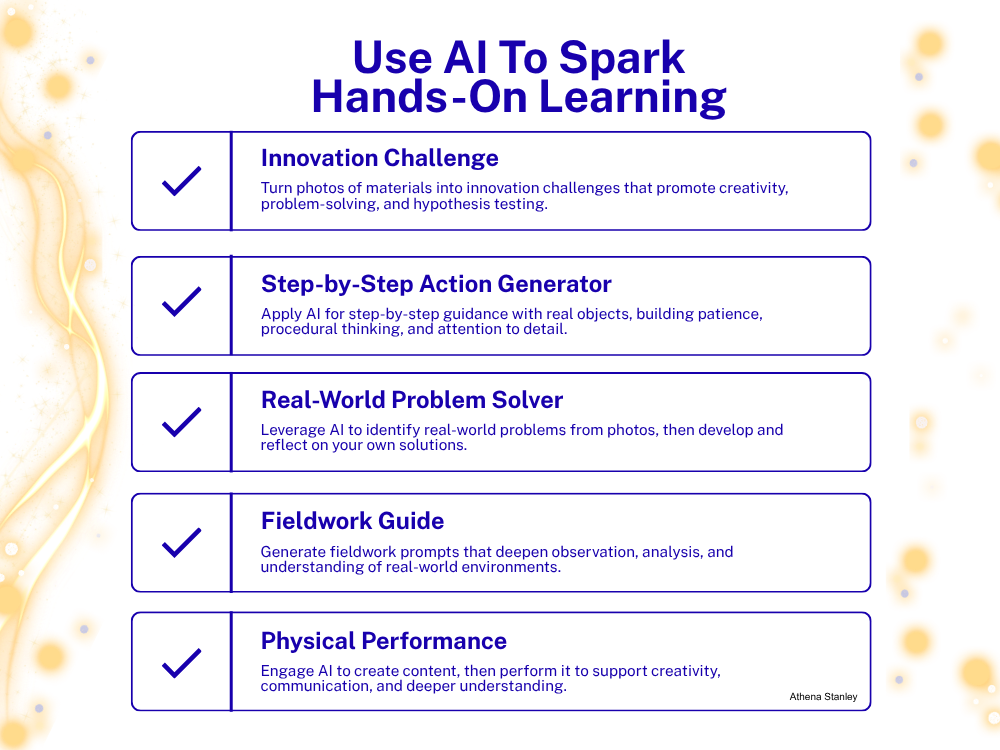
Teachers increasingly use AI to bridge the gap between classroom learning and tangible community challenges. One approach asks students to photograph their immediate environment—a school hallway, neighborhood street, or local park—then use AI to identify environmental or social problems without receiving ready-made solutions.
This method shifts the learning dynamic. Rather than students passively receiving answers, AI acts as a problem-identification tool. A student might photograph a poorly lit intersection and ask an AI system to list potential safety concerns. The student then owns the analytical work: researching causes, interviewing community members, and proposing interventions.
The strategy aligns with project-based learning frameworks that educators have long advocated. Students develop observation skills, learn to ask precise questions, and practice applying classroom knowledge to authentic situations. The AI component removes a common friction point: students no longer need advanced environmental science expertise to recognize that a problem exists.
Other classroom applications include using AI to generate research questions based on student observations, analyze data students collect in the field, or prototype solutions before implementation. Teachers report that AI scaffolding—providing structure without answers—keeps students engaged in genuinely difficult intellectual work.
The approach works best when teachers set clear boundaries. Educators at schools using these methods emphasize that AI should not generate solutions for students. Instead, it surfaces patterns and asks clarifying questions, pushing students toward independent reasoning.
Implementation requires access to reliable devices and internet connectivity, a barrier in under-resourced schools. Schools also report needing professional development time so teachers understand how to guide AI conversations and maintain academic rigor.
When executed properly, the strategy transforms how students see learning environments. Rather than treating school or neighborhood as static backgrounds, students develop the habit of noticing, questioning, and acting on community needs. The hands-on work that follows—interviews, surveys, prototyping—extends