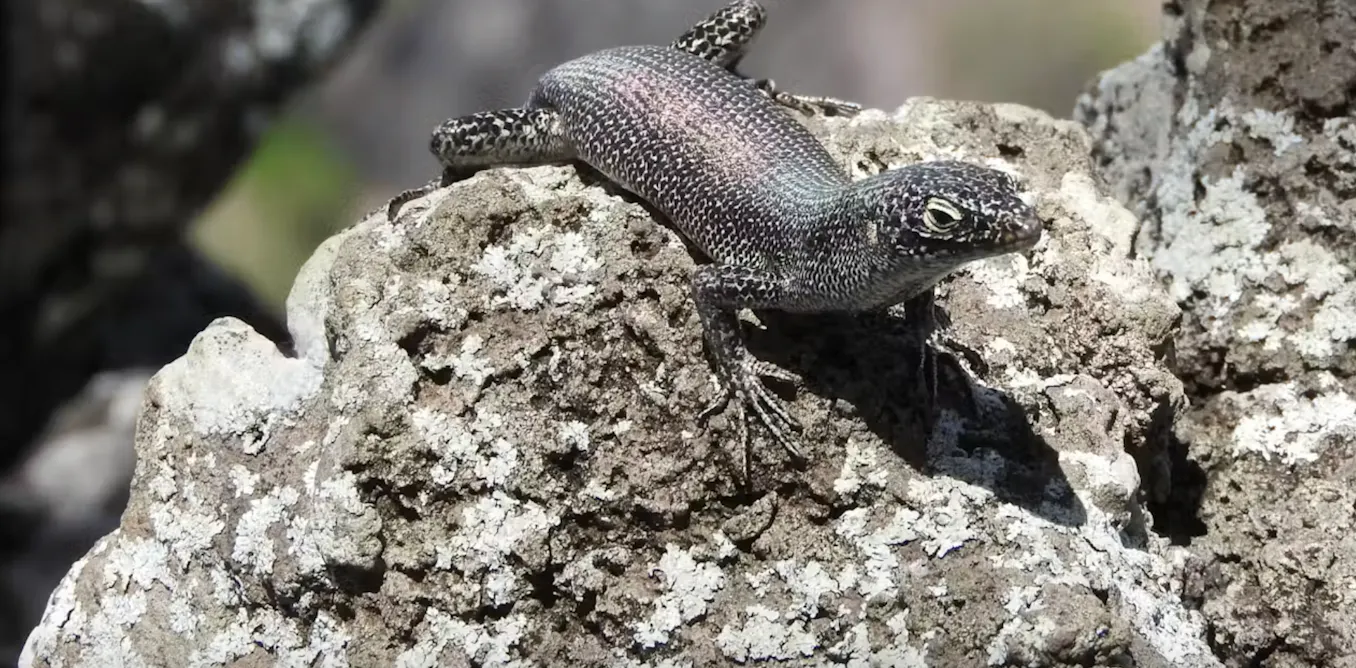
Brazil's Noronha skink, a lizard species that arrived on the remote island of Fernando de Noronha millions of years ago, has undergone a dramatic reproductive shift that now threatens its survival in a changing world.
The species, which drifted to the island from Africa on floating vegetation, evolved from egg-laying reproduction to live birth, a transformation triggered by the island's unique environmental conditions. This adaptation allowed the skinks to reproduce more successfully in their isolated habitat, where warm temperatures and limited resources created specific survival pressures.
However, this reproductive strategy, once advantageous, now faces mounting challenges. The rapid pace of environmental change on the island, driven by climate shifts and human activity, has outpaced the skink's ability to adapt. The species' reliance on live birth, combined with its small population and limited genetic diversity, leaves it vulnerable to disruptions in temperature stability and food availability that its ancestors never encountered.
Island species frequently encounter this evolutionary trap. When a trait becomes specialized for a particular environment, the organism loses behavioral or physiological flexibility. The Noronha skink's reproductive switch provided a competitive edge in stable island conditions, but that same specialization now constrains its responses to novel stressors.
Conservation researchers have identified the disconnect between the skink's evolutionary history and contemporary ecological pressures as a critical concern. The lizard's population remains concentrated on Fernando de Noronha, offering no geographic buffer against localized disturbances. Climate variability affects incubation conditions for developing embryos, while shifts in insect populations threaten food chains.
The Noronha skink represents a broader pattern in island ecology. Species that evolved under stable conditions often lack the genetic or behavioral resources needed for rapid adjustment. This case highlights how evolutionary success in one era can become an evolutionary liability in the next, particularly as climate change and human-driven environmental shifts accelerate globally.