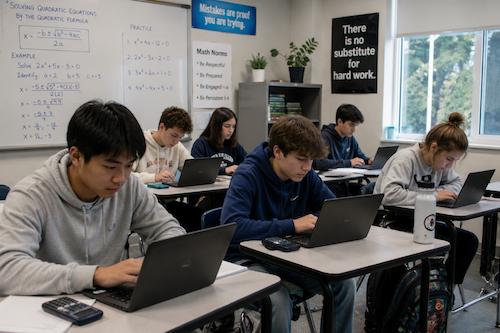
A new survey shows that 68 percent of top-performing math students use AI tools to help with assignments and exams. The findings reveal that students view artificial intelligence as a legitimate study resource rather than purely a shortcut or cheating mechanism.
The data reflects a broader shift in how students approach mathematics learning. High-achieving students report turning to AI when they need extra help understanding concepts or working through difficult problems. The tools appear to function as supplementary tutors, providing step-by-step explanations and alternative approaches to solving equations.
This acceptance among strong math students contradicts some educator concerns that AI would undermine learning. Instead, the survey suggests these students integrate AI into structured study habits. They use it to verify their work, explore different solution methods, and clarify confusion before submitting assignments.
The trend raises practical questions for schools. Many institutions have banned or restricted AI in classrooms without developing clear policies about when and how students can use it responsibly. This survey data may push educators to reconsider blanket prohibitions in favor of guidelines that distinguish between legitimate study support and academic dishonesty.
Teachers and administrators face a decision point. Rather than blocking access entirely, schools could establish explicit rules about AI use. Some institutions already allow AI in homework but not exams. Others require students to cite AI assistance. These approaches acknowledge that the technology exists and students will use it while maintaining academic integrity standards.
The survey focused specifically on top performers, which matters. These students demonstrate they can succeed with AI as a tool. Whether AI helps struggling students equally remains unclear from this data. Schools might benefit from additional research tracking how different student populations use these tools and whether outcomes improve across performance levels.
As AI becomes embedded in everyday life, schools cannot ignore how students actually study. Instead, they can shape that behavior through clear policies that treat AI as a learning resource when used appropriately.