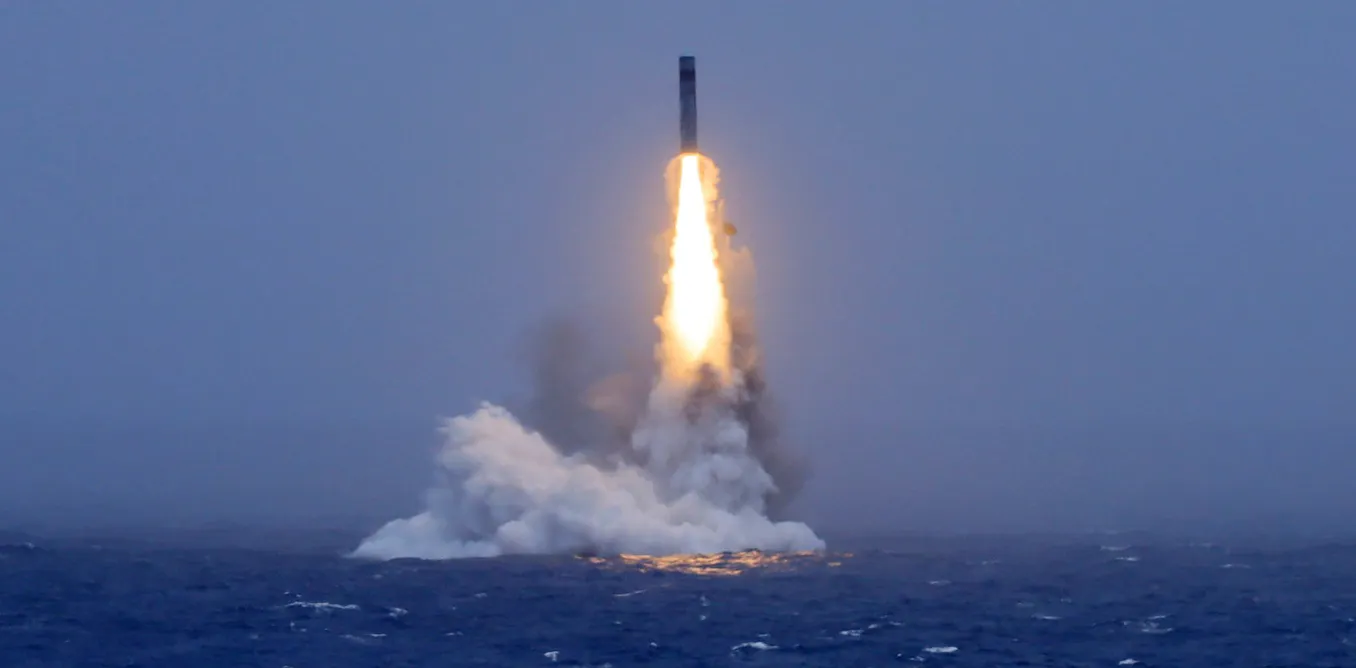
China conducted a submarine-launched ballistic missile test in the Yellow Sea, a routine exercise that major nuclear powers perform regularly. The test itself followed standard protocols observed by Russia, the United States, France, and Britain. Yet the launch triggered sharp diplomatic responses and media alarm in Washington and allied capitals, reflecting deeper anxieties about China's military modernization and regional power balance.
The disparity between the test's routine nature and the reaction it generated exposes how China's nuclear capabilities have shifted perceptions of stability in the Indo-Pacific. Western officials expressed concern not about the test format but about the accelerating pace of China's weapons development. The People's Liberation Army Navy has expanded its submarine fleet significantly over the past decade, increasing the frequency and sophistication of such exercises.
The reaction also reflects asymmetries in how nuclear powers are evaluated. China's tests receive scrutiny partly because its military transparency remains limited compared to the United States and its allies. Fewer public announcements, less detailed technical disclosure, and opacity about strategic intentions amplify uncertainty. Intelligence agencies monitor Chinese capabilities closely, but gaps in official information fuel speculation and worst-case assessments.
Regional allies including Japan, South Korea, and the Philippines watched the test closely, concerned about what it signals for their security. The missile test serves as a visible reminder of China's nuclear deterrent and growing naval reach, factors that shape military planning and diplomatic calculations across Asia.
The underlying story extends beyond any single test. It reflects how nuclear modernization by rising powers reshapes security calculations in ways that differ from Cold War precedent. When established nuclear powers like France or Britain conduct tests, the international system treats them as stable actors maintaining existing arsenals. China's tests, by contrast, register as markers of a shifting balance and expanding capability that challenges regional stability assumptions.
Understanding this context requires distinguishing between the technical routine of missile testing and the geopolitical significance observers assign to it. The test itself