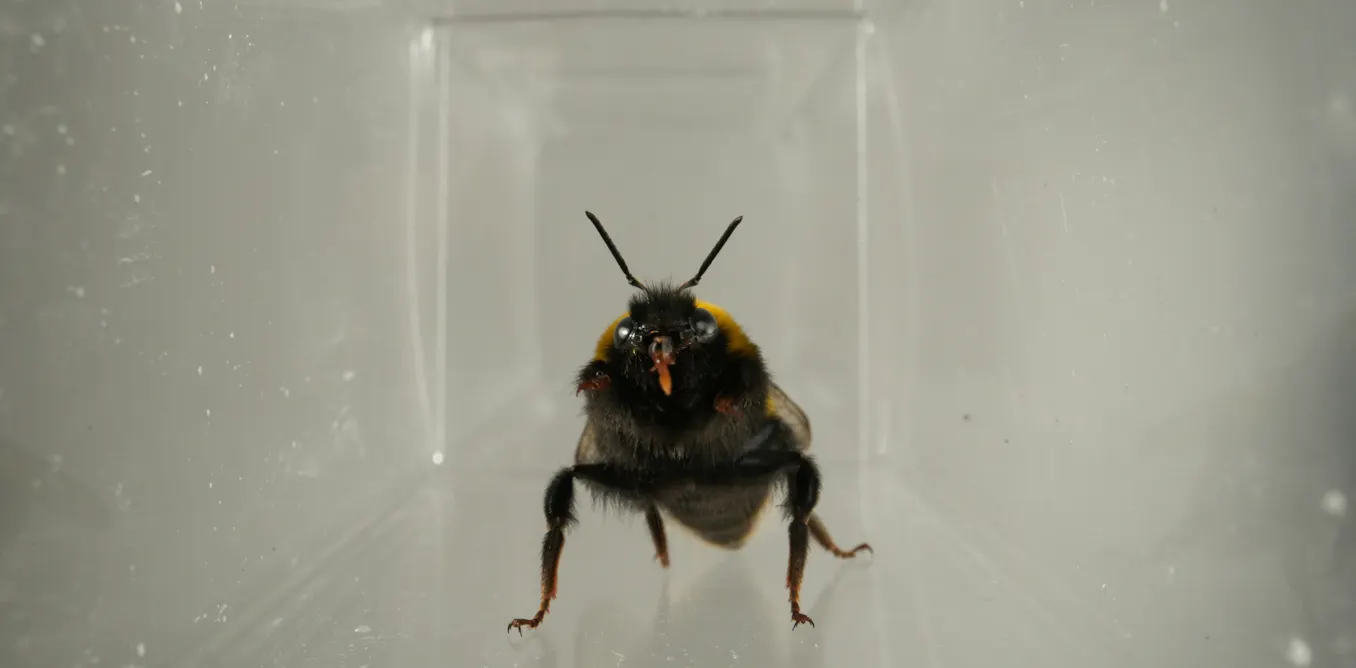
# Study Suggests Bees Display 'Facial Expressions' Linked to Inner Mental States
Researchers examining bee behavior have found evidence that the insects produce distinct facial patterns that may reflect their emotional or conscious states. The study joins a growing body of research challenging the assumption that consciousness exists only in mammals and birds.
The work centers on how bees' facial movements correlate with different situations and experiences. When bees encounter food sources or engage in social interactions, their facial structures shift in observable ways. These changes appear to track with what researchers interpret as positive or negative experiences, suggesting the insects may possess subjective awareness of their environment.
The research builds on earlier work demonstrating that bees process information with greater complexity than previously assumed. Studies have shown bees can navigate, solve problems, recognize human faces, and remember individual humans. They also demonstrate preferences, learning capabilities, and responses to pain that scientists interpret as indicating some form of conscious awareness.
The question of insect consciousness remains contentious in the scientific community. Traditional frameworks assumed only larger-brained animals possessed subjective experience. But mounting evidence from behavioral studies, neurological research, and now facial expression analysis suggests simpler nervous systems may still generate conscious experience.
For education and science communication, this research matters. It challenges students and the public to reconsider assumptions about which creatures possess inner lives. If bees demonstrate facial expressions tied to mental states, that reshapes how we think about insect worth and our responsibility toward them.
The findings have practical implications for agricultural policy, pesticide regulation, and environmental education. Schools teaching biology or ecology now confront the question of whether insects deserve moral consideration beyond their ecological function.
The research does not claim certainty about bee consciousness. Rather, it documents observable facial changes and suggests connections to subjective experience. Scientists continue investigating whether these patterns definitively indicate consciousness or represent something else entirely. The work remains preliminary, but it signals a shift