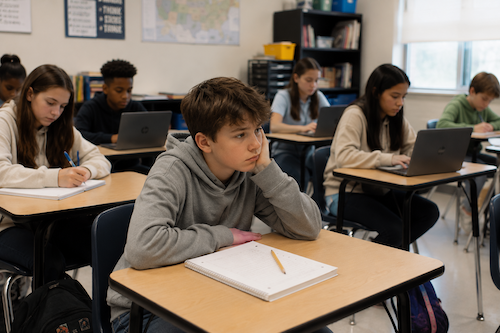
Student disengagement has reached a critical point in classrooms nationwide. Educators report growing difficulty connecting with learners, signaling a need for fundamental changes in how instruction is delivered and designed.
The problem extends beyond typical behavioral issues. Research and classroom observation suggest that disengagement stems directly from how learning experiences are structured. When students tune out, the root cause often lies in curriculum design, teaching methods, and classroom environments rather than student motivation alone.
Traditional lecture-based instruction increasingly fails to hold student attention. Passive learning models, where students absorb information without active participation, produce predictable disengagement. Students benefit from interactive, hands-on learning that connects to real-world applications. Project-based learning, collaborative problem-solving, and student-centered approaches have shown stronger results in maintaining focus and building understanding.
The timing of this shift matters. Post-pandemic learning patterns have altered student expectations and attention spans. Many students now expect personalized, flexible learning paths rather than one-size-fits-all instruction. Schools that maintain purely traditional models face steeper challenges in reaching these learners.
Effective classroom redesign requires multiple changes. Teachers need time and training to implement new pedagogical strategies. Schools must invest in professional development that moves beyond one-off workshops toward sustained coaching. Classroom layouts should support collaboration and movement, not just rows of desks facing forward. Technology integration, when purposeful, can enable differentiation and engagement, though it cannot replace strong teaching.
Administrators play a role by protecting instructional time, reducing excessive testing that narrows curriculum, and allowing teachers autonomy in designing learning experiences. School leaders who support experimentation and risk-taking find teachers more willing to try innovative approaches.
The shift toward student-centered learning addresses both engagement and equity. Low-income students and students of color have historically experienced the most rigid, test-focused instruction. Redesigned classrooms with active learning benefit all students but