# The Screen-Time Debate's Blind Spot
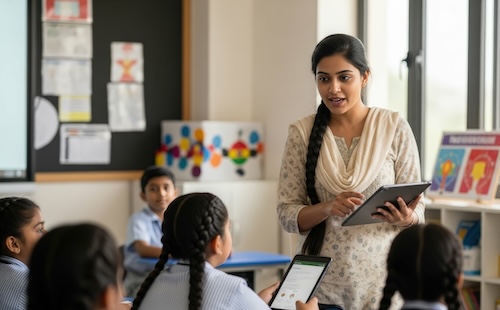
Teachers face a genuine tension between using AI tools to improve instruction and concerns about expanding screen exposure in classrooms. A fifth-grade educator in São Paulo articulated this challenge during professional development: "I want to use AI to plan better lessons. But how do I do that without just putting kids in front of another screen?"
This question reflects a widespread misunderstanding about AI's role in education. The conversation often defaults to whether students should spend time on devices, but it misses a larger point. AI can reduce teacher workload during planning, grading, and differentiation without necessarily adding screens for students.
When teachers use AI to draft lesson plans, analyze student work, or create personalized practice problems, they work offline from the actual classroom. The tool supports backend instruction preparation, not front-end student engagement. A teacher who spends two hours less per week on curriculum design gains time for direct instruction, small-group intervention, or one-on-one feedback. That teacher likely uses fewer screens overall, not more.
The barrier isn't technological. It's conceptual. Schools and districts often default to putting students on tablets or laptops when adopting new tools because that deployment model feels concrete and measurable. Administrators can track device usage. They cannot easily quantify the hours a teacher saves planning.
Yet the original question reveals what teachers actually need: time and structure. AI can provide both without replacing human instruction or expanding classroom screen time. A teacher who receives an AI-generated draft lesson plan for teaching fractions still owns the instruction. She can adapt it, refine it, or reject it outright. The technology serves her judgment, not her students' screen time.
The blind spot in current screen-time debates is that they treat all technology identically. A student watching a video and a teacher using software to streamline planning represent fundamentally different uses. One happens