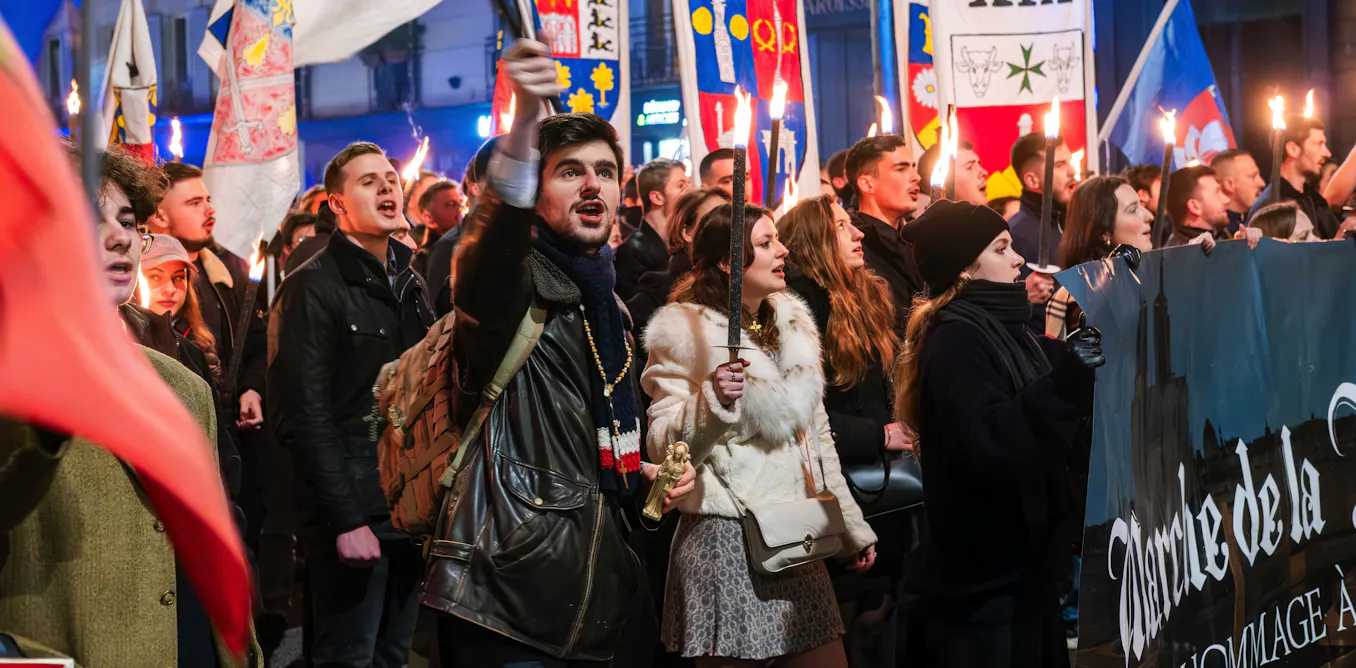
# Europe's Far Right Gains Ground Among Educated Young People Through Cultural Arguments
Far-right political movements across Europe are reshaping their messaging to appeal to educated youth by framing debates around cultural identity rather than economics alone. This strategic shift moves beyond traditional anti-immigration rhetoric to emphasize cultural preservation, national heritage, and concerns about rapid social change.
The strategy proves effective. Young people with university degrees in countries like France, Germany, and Italy increasingly support far-right parties. This pattern contradicts decades of political science assumptions that education alone insulates voters from extremist appeals.
The cultural framing works because it addresses anxieties that resonate across class lines. Free movement within the European Union creates economic opportunities, yet many young people report feeling culturally displaced or uncertain about what European identity means in increasingly diverse societies. Far-right parties capitalize on this disconnect by positioning themselves as defenders of distinct national cultures against perceived homogenization.
Universities themselves sometimes become recruitment grounds. Campus organizations linked to far-right movements host intellectually framed discussions about cultural continuity, tradition, and the pace of social transformation. These events attract students who feel alienated from mainstream progressive consensus on campuses.
The shift matters because it makes far-right politics harder to dismiss or counter. Economic arguments have clear policy solutions. Cultural identity claims operate differently. They tap into genuine questions about belonging and social cohesion that traditional left-right politics struggles to address.
Educators and policymakers face a challenge: acknowledging legitimate concerns about rapid cultural change while rejecting the zero-sum frameworks that far-right movements promote. Simply dismissing cultural anxiety as bigotry fails to persuade. Evidence-based conversations about integration, social belonging, and community formation may offer better alternatives.
The data shows education no longer guarantees resistance to far-right politics. Understanding how cultural messaging operates across socioeconomic groups becomes essential for anyone working in democratic institutions.