# An Updated Guide To Questioning In The Classroom
Teachers who master questioning techniques unlock deeper learning than lecture-based instruction alone. The ability to ask the right question at the right time reveals authentic understanding among students and drives engagement beyond surface-level comprehension.
Effective classroom questioning separates students who memorize from those who think critically. When teachers pause to ask probing questions, they create space for students to process information, connect concepts, and articulate their reasoning. This practice shifts learning from passive reception to active construction of knowledge.
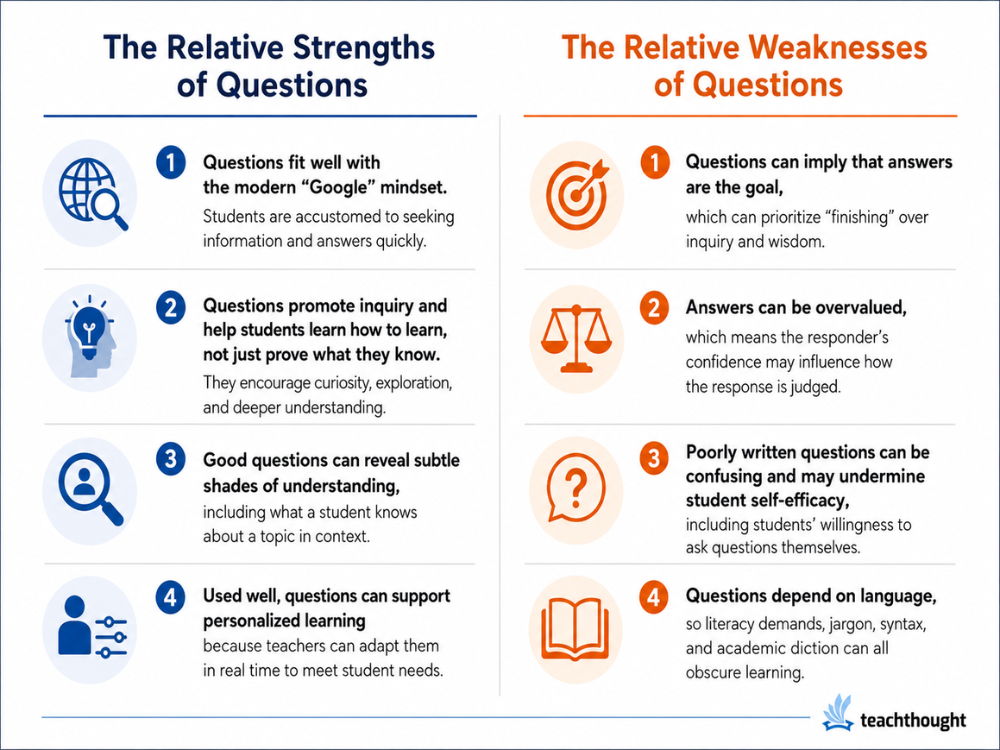
Research in cognitive science supports what experienced educators know: questions function as learning tools, not just assessment mechanisms. Strategic questioning helps teachers diagnose gaps in student understanding in real time. Rather than waiting for a quiz or test, teachers can adjust instruction immediately when students struggle to answer a conceptual question.
Different question types serve distinct purposes. Lower-order questions (recalling facts, basic definitions) establish foundational knowledge. Higher-order questions (analyzing relationships, evaluating evidence, synthesizing ideas) push students toward deeper thinking. The strongest classroom practice combines both, with teachers deliberately moving students from recall to application.
Timing and wait time matter tremendously. Teachers who pause after asking a question allow students processing time. Research shows that pausing for three to five seconds increases the length and quality of student responses, boosts student confidence, and creates more equitable participation. Students who process slowly no longer get shut out by faster peers.
Questioning also builds teacher-student rapport. When teachers genuinely ask students for their thinking rather than fishing for predetermined correct answers, students sense the difference. Authentic questions invite dialogue. Students become willing to take intellectual risks when they trust their teacher genuinely values their thinking.
Updating questioning practices requires conscious effort. Many teachers default to rapid-fire questions aimed at coverage rather than understanding. Shifting toward fewer, better questions demands intentional planning. Teachers must anticipate student responses, prepare