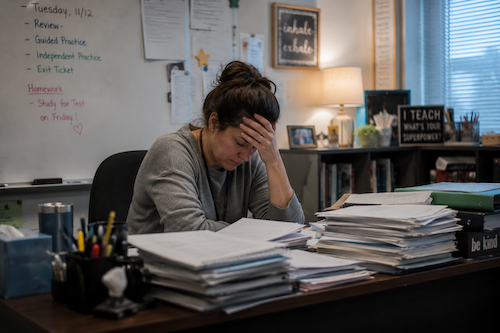
Teacher stress remains substantially higher than it was before the pandemic, despite a modest decline in 2026. Educators report stress levels that far exceed those of comparable working adults, along with worse overall well-being and greater job dissatisfaction.
The data reveals a workforce under sustained pressure. Teachers cite multiple overlapping challenges: lower compensation relative to other professions requiring similar education, the need to work second jobs to cover living expenses, and out-of-pocket spending on classroom supplies and materials. These financial pressures compound the emotional and physical toll of classroom work itself.
The modest improvement in 2026 does not signal a return to pre-pandemic conditions. Teachers still report stress levels substantially higher than peers in other occupations with equivalent education and experience. This persistent gap reflects systemic issues that brief improvements have not resolved.
Burnout affects teacher retention directly. Schools across the country struggle to fill open positions and retain experienced educators. When veteran teachers leave the profession, districts lose institutional knowledge and classroom expertise. New teachers enter an already-stressed system, reducing their likelihood of long-term careers in education.
The combination of emotional labor, insufficient pay, and financial instability creates a retention crisis. Teachers work in environments that demand constant adaptation, emotional regulation, and investment in student outcomes, yet compensation and working conditions lag behind other professions. Many cannot afford to stay without supplementing their income elsewhere.
This trend has immediate classroom consequences. High turnover disrupts continuity in student learning. Schools struggling to hire qualified teachers may resort to less experienced staff or fill positions with substitutes, affecting instruction quality.
Addressing teacher burnout requires action on compensation, class sizes, administrative burden, and classroom support. District leaders, policymakers, and state legislators control levers that could meaningfully improve working conditions. Without intervention, the teaching profession faces continued attrition of experienced educators and difficulty attracting talented new entrants.