# Building Math Skills Through Project-Based Learning
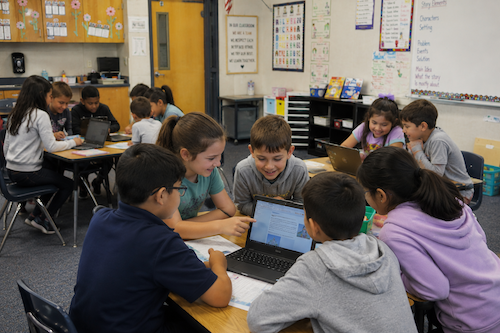
Project-based learning (PBL) is reshaping how students engage with mathematics by connecting abstract concepts to real-world design challenges. Schools now use hands-on projects like designing functional backpacks to teach geometry, measurement, and spatial reasoning alongside traditional computational skills.
In PBL math classrooms, students move beyond worksheets and textbook problems. They tackle authentic problems that require mathematical thinking. A backpack design project, for example, demands students calculate surface area, manage budgets, optimize compartment dimensions, and consider weight distribution. These tasks embed math into purposeful work rather than isolating it as a standalone subject.
The approach addresses a persistent problem in math education: students often memorize procedures without understanding why they matter. When seventh graders design a backpack for a specific user, they see why geometry applies. They grasp why units of measurement matter. The math becomes a tool for solving a real problem, not an arbitrary exercise.
Research on PBL consistently shows that students retain concepts longer when they learn through application. Teachers report that struggling learners gain confidence when they contribute specialized knowledge to group projects. A student weak in computation might excel at visualizing 3D designs or managing a budget spreadsheet.
The foundation built in elementary and middle school fundamentally shapes later success. Students who understand mathematical concepts rather than just memorize formulas enter high school algebra and geometry with genuine comprehension. They recognize patterns. They troubleshoot errors. They ask better questions.
Schools implementing PBL math report shifts in student attitudes. Math becomes less threatening and more collaborative. Students see themselves as problem-solvers rather than passive learners following procedural steps.
Transitioning to PBL requires teacher training and curriculum redesign. Teachers must learn to facilitate inquiry rather than deliver lectures. They must assess learning through projects and portfolios, not just tests. The shift demands time