# When STEM Lessons Are Too Easy, Students Stop Thinking
Teachers often equate student engagement with learning, but new thinking about STEM instruction challenges that assumption. When lessons lack appropriate difficulty, students disengage cognitively even if they appear busy completing tasks.
The problem centers on a mismatch between lesson design and student capability. Easy STEM activities keep hands occupied while minds remain passive. Students complete worksheets, follow scripted experiments, or solve problems without meaningful struggle. They check boxes rather than grapple with genuine challenges. This false engagement masks a critical gap: students aren't developing the thinking skills that STEM education should build.
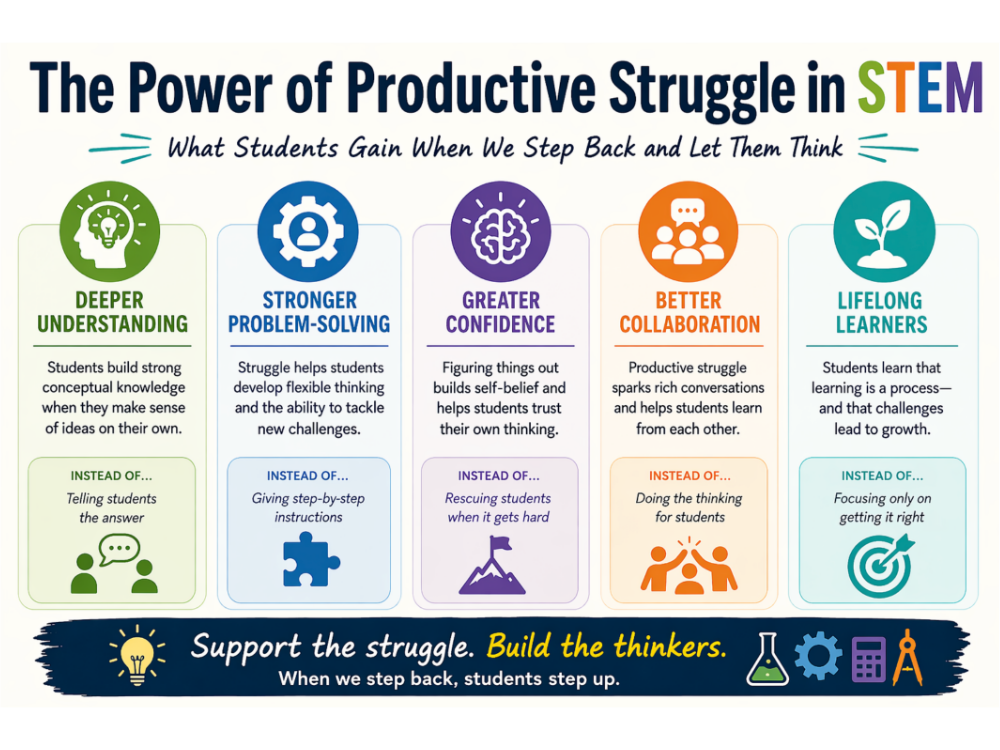
Research in cognitive science supports this distinction. Deep learning requires productive struggle. When tasks fall below a student's current ability level, the brain doesn't form new neural pathways. Students complete assignments without building conceptual understanding or problem-solving capacity. They may answer questions correctly without truly understanding the science, technology, engineering, or mathematics behind their answers.
The solution requires teachers to calibrate difficulty deliberately. Lessons must challenge students at the edge of their competence, not beyond it and not below it. This "zone of proximal development" is where real learning happens. Students need tasks that require them to think, fail safely, adjust, and succeed through their own cognitive effort.
This shift demands rethinking classroom norms. Teachers must tolerate productive struggle. They must resist the urge to immediately help students who encounter difficulty. Confusion and mistakes are data points that signal learning is happening, not signs that instruction failed.
Engagement checklist matter less than cognitive demand. A classroom where students sit quietly thinking hard looks less "engaged" than one where students busily complete easy tasks. The busier room feels productive. The thinking room feels slow.
Educators face a choice: design STEM lessons that look engaging, or design lessons that build genuine thinking capacity. These aren't always